





















Guide
How to Read a Japanese Auction Sheet
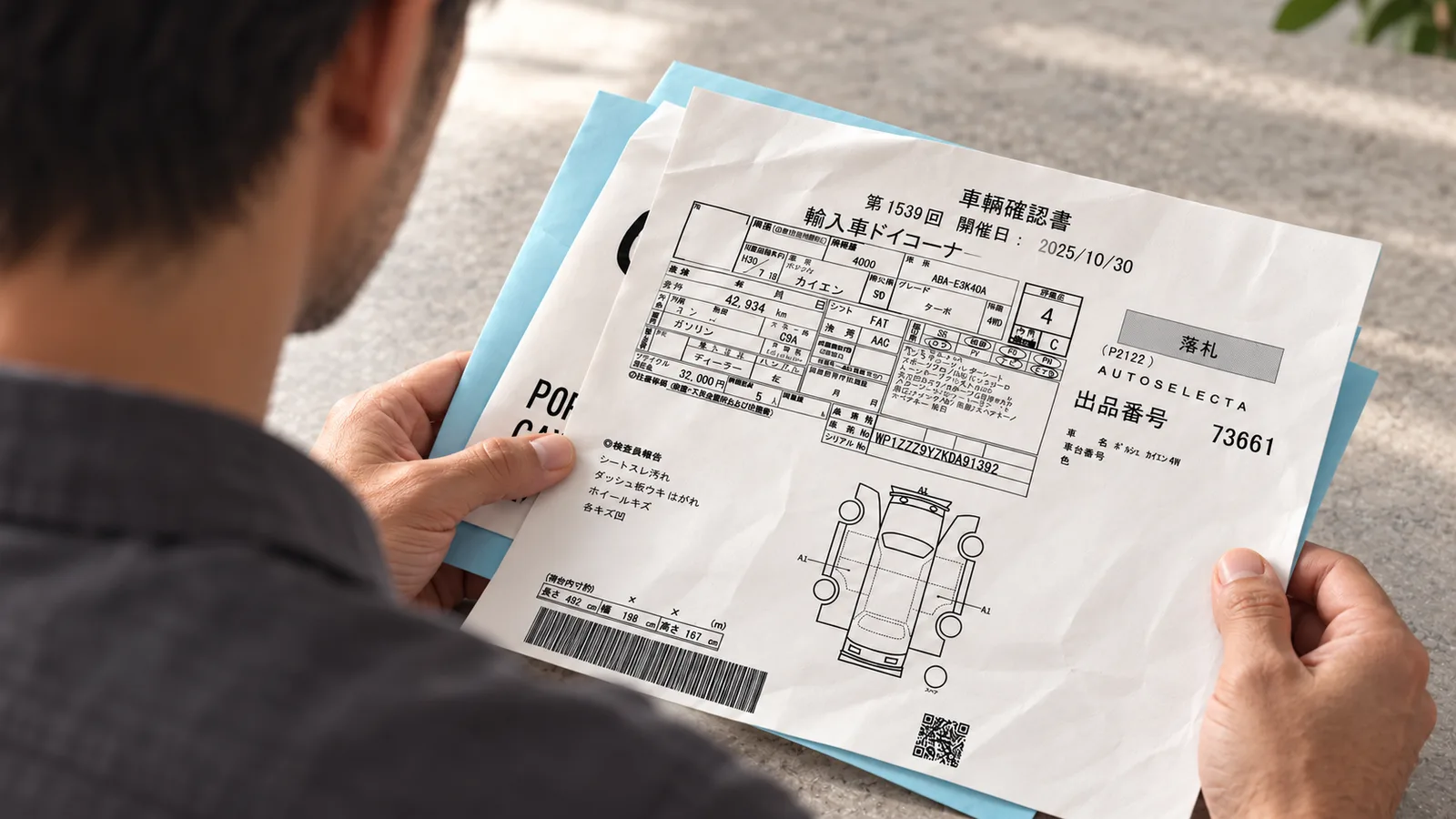
Every car at a Japanese auction is inspected by the auction house before it sells, and everything the inspector finds goes on one page: the auction sheet. It is the most useful document you will have when buying a car from Japan, and it is written in Japanese shorthand. This guide explains how to read one, and what we check for you before you bid.
What is a Japanese auction sheet?
The auction sheet (sometimes called an inspection sheet) is the auction house's own report on the car, filled in by an independent inspector at the auction. It records:
- The overall grade, a single figure for the car's condition.
- The interior grade, a letter for the cabin.
- A map of the bodywork, marked with every scratch, dent, repair and patch of rust the inspector found.
- The mileage, as read from the car and checked against its records where the auction can.
- The specification: model code, engine size, gearbox, colour code, equipment and the year it was built or first registered.
- The inspector's notes, a few handwritten lines about anything that stood out.
Because the auction house writes it, not the seller, the sheet is the closest thing to an independent condition report you can get on a used car.
The overall grade
The overall grade is the number most buyers look at first. Japan's auction houses use broadly the same scale:
- S or 6: as new, usually a car with delivery mileage.
- 5: excellent, with very little wear.
- 4.5: very good, light wear for its age and mileage.
- 4: good, some small marks and wear.
- 3.5: fair, more marks and wear, or higher mileage.
- 3 and below: rough, with visible damage or wear.
- R or RA: the car has had repairs to its body. RA means a lighter repair than R.
- No grade (*)**: the car was not graded, often because it is modified, damaged or sold as seen.
A grade is a summary, not a verdict. A grade 4 car with clean bodywork and a tidy interior can be a better buy than a grade 4.5 with a damaged panel the grade doesn't show at a glance. That is why the rest of the sheet matters. Our guide to auction grades goes through each grade in more detail.
The interior grade
The interior grade is a letter, usually from A (excellent) to E (poor). It covers the seats, carpets, dashboard and headlining: stains, wear, tears, burns and smells. Many enthusiast cars carry a C, which means normal wear for the age.
Reading the car map
The outline of the car on the sheet is where the detail is. The inspector marks each panel with a letter for what they found and a number for how big it is, usually 1 (small) to 3 (large). The common marks are:
- A: scratch (A1 is a small scratch, A3 a large one).
- U: dent.
- B: dent with a scratch.
- W: wave in the panel, a sign of a repair or repaint.
- S: rust.
- C: corrosion.
- X: a panel that needs replacing.
- XX: a panel that has been replaced.
- Y: a hole or crack.
A few small A1 and U1 marks are normal on any used car. W, X and XX marks tell you about past repairs, and S and C marks on the underside matter on cars from the north of Japan, where roads are salted in winter.
Mileage
The sheet records the mileage on the odometer. Where the auction house has the car's earlier inspection records it checks the figure against them, and a car whose mileage can't be confirmed is marked as such on the sheet. If you see a mileage warning, treat the figure as unknown.
The inspector's notes
The handwritten notes are often the most important part, and the hardest to read. They point out things like a warning light on the dashboard, a noise from the engine or gearbox, modifications, a missing spare key, a cracked windscreen or a smell of smoke.
How we translate the sheet
Every car on Autoselecta shows its original auction sheet. Once you are approved to bid, or have asked us about a car, you can have the sheet translated into English on the site: the grades, the marks on the map, the mileage and the inspector's notes. Your first translation is free, then £1 for two cars. Translations are made automatically, so if anything on the sheet matters to your decision, message us and we will check it against the original before you bid.
What to look for before you bid
- Match the grade to your plans. A grade 4 or 4.5 is the usual target for a car you want to drive and enjoy. R and RA cars can be good value if you know what was repaired.
- Read the map, not just the grade. Look for W, X and XX marks, which show repairs, and S and C marks on the underside.
- Check the mileage note. A confirmed mileage is worth paying for.
- Read the inspector's notes in full. They often explain a lower grade.
- Compare with what similar cars sold for. Every car's page on Autoselecta shows recent auction results for the same model, so you can judge a fair maximum bid.
When you're ready, browse the cars at auction now, each with its translated sheet, or read how buying from a Japanese auction works.