




Guide
Nissan Silvia S15 Buyers Guide: Everything You Need to Know
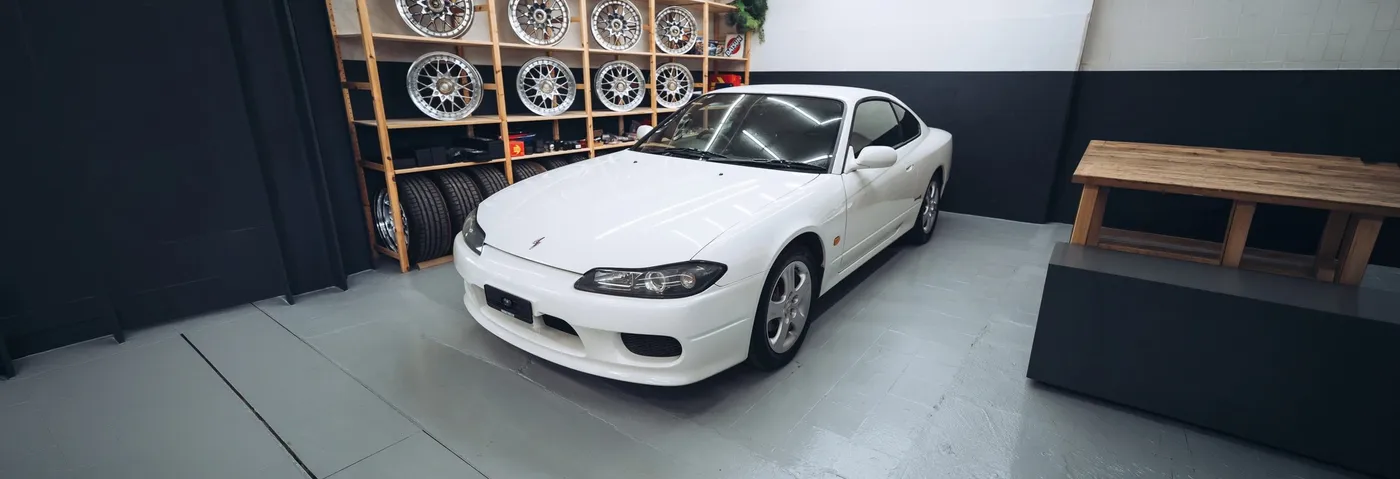
This Nissan Silvia S15 Buyers Guide explains everything you need to know before buying one, from the differences between spec r and spec s models to common problems, auction grades, values and importing directly from Japan.
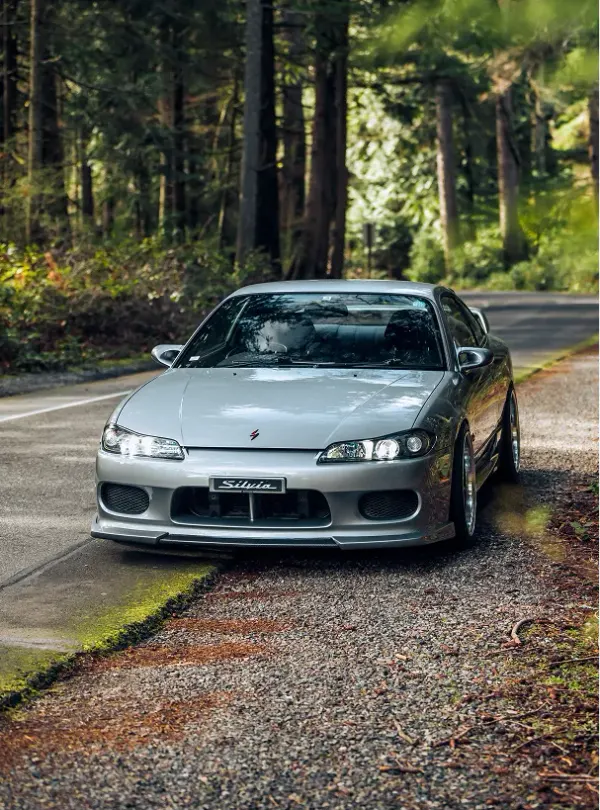
There are very few Japanese sports cars that have managed to transcend their era, cross multiple continents and still be spoken about with the same reverence today as they commanded when they first rolled off the production line. The Nissan Silvia S15 is one of them.
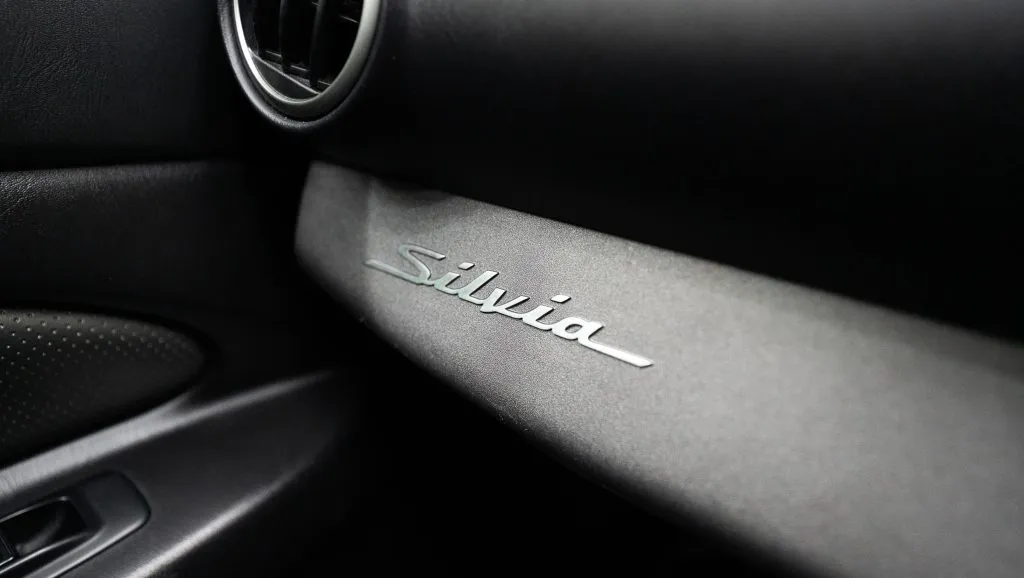
Produced between 1999 and 2002, the S15 arrived as the final evolution of Nissan's long-running Silvia lineage and immediately made a statement. It was lighter, sharper and more aggressive looking than any of its predecessors. With a bodyshell that had clearly been penned with the driving enthusiast in mind, Nissan gave the S15 a short wheelbase, near-perfect front to rear weight distribution and a turbocharged engine that the aftermarket community would spend the next two decades pushing well beyond what anyone imagined possible from the factory.
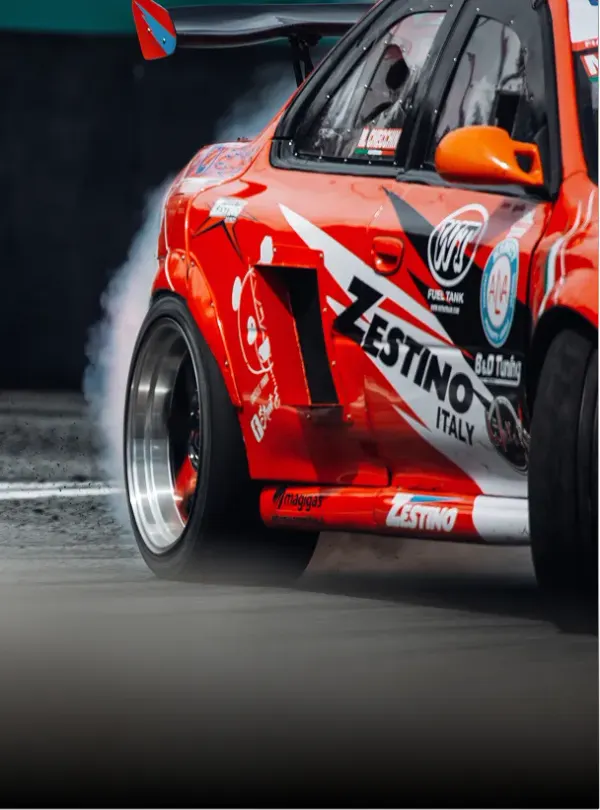
The timing of the S15's release was significant. Japanese drifting was evolving from underground touge mountain roads into the televised spectacle of D1 Grand Prix, and the S15 slotted into that world as though it had been designed specifically for it. In the hands of professional drivers and weekend warriors alike, the S15 earned a reputation as one of the most natural, forgiving and rewarding rear-wheel-drive platforms ever built. It rewarded driver skill rather than masking it. That distinction matters enormously to the kind of buyer who seeks one out today.
Add to that a starring role in early video game culture, a position at the heart of social media car communities and a growing collector narrative, and you have a vehicle whose value trajectory is only pointing in one direction.
At Autoselecta.com we source Nissan Silvia S15s directly from Japanese auctions every week, providing full auction translations, independent inspection reports and end-to-end import management to buyers across the UK, Europe, USA, Australia and the UAE.
View Nissan Silvia S15 Listings
Why Japan Still Has the Best Silvia S15s
Japan is without question the best place in the world to source a Nissan Silvia S15. The domestic market produced the car, maintained it meticulously through a culture that values service history and originality, and stored many of these vehicles in dry conditions that other countries simply cannot replicate.
Cars that left Japan early, particularly those that entered drift and tuning scenes in Australia, the UK and Europe in the early 2000s, have in many cases endured two decades of hard use, modification and repair. Many have been re-shelled, rebuilt or simply pushed beyond the point where their history can be accurately verified. That does not make every exported car undesirable, but it does mean that the cleanest and most original examples almost always remain in Japan.
Japanese auction houses continue to put exceptional S15 examples across the block every single week. Low mileage factory original Spec R turbo cars still surface regularly. Rare colour combinations that never left domestic shores appear in auction catalogues that most overseas buyers never get to see. Dealer-maintained collector examples with complete service records remain available to buyers who know where to look and how to act quickly when something exceptional appears.
That is precisely what Autoselecta does on behalf of our clients. We monitor Japanese auction halls daily, translate every sheet in full and give buyers access to cars that the wider market simply does not see.
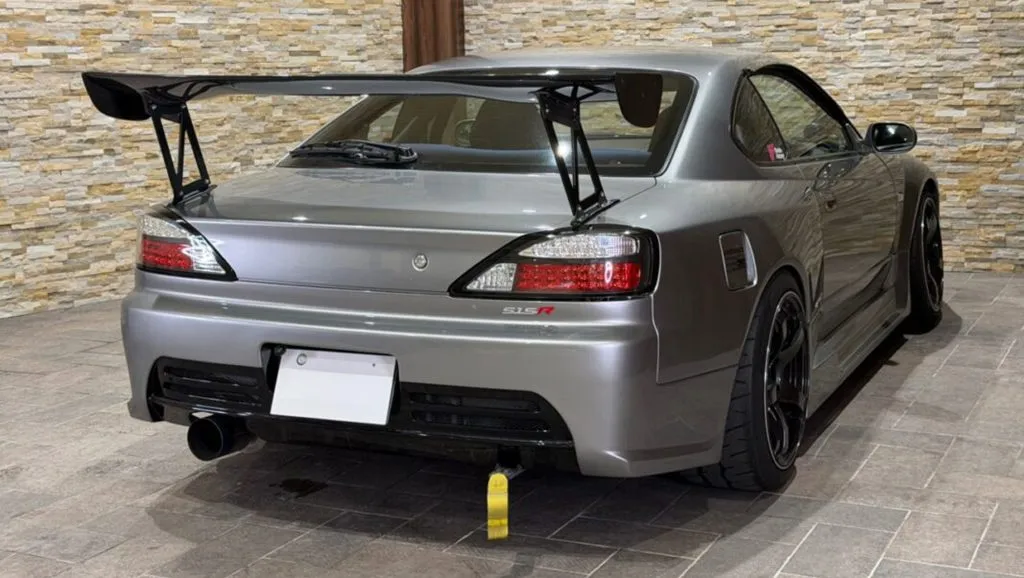
Understanding the Model Range: Spec R and Spec
The Silvia S15 was sold in two main variants, and understanding the difference between them is the single most important starting point for any prospective buyer. They share the same shell and much of the same visual identity, but they are fundamentally different cars in terms of drivetrain, character and collector appeal.
The Spec R: The One Everyone Wants
As this Nissan Silvia S15 Buyers Guide explains, the Spec R remains the most desirable model for enthusiasts and collectors. The Spec R is the car that built the legend. Powered by Nissan's SR20DET turbocharged 2.0 litre four-cylinder engine in its most developed form, the S15 Spec R produced 247 horsepower from the factory, a figure that Nissan's engineers arrived at largely to comply with Japan's then-gentleman's agreement on power output.
In reality, the SR20DET in S15 tune was considerably more capable than those numbers suggested, and the tuning community wasted no time in demonstrating exactly that. With a strong bottom end, a capable cylinder head and a turbocharger that could be replaced with something far larger while retaining the stock internals, the SR20DET in Spec R specification became one of the most widely tuned engines in Japanese performance car history.
The Spec R came from the factory with a close-ratio six-speed manual gearbox, a torque-sensing helical limited slip differential, Brembo-sourced front brakes, revised suspension geometry and a body that sat noticeably more aggressively than the naturally aspirated Spec S. An optional Aero package added a full factory body kit that remains extraordinarily desirable today. Spec Rs also came with a standard viscous LSD and the option of a Super HICAS four-wheel steering system on certain configurations, though most enthusiasts today prefer examples without it due to complexity in maintenance.
Clean, unmodified, low-mileage Spec R cars are now among the most sought-after Japanese sports cars in the world. Collector demand continues to outpace supply, and the number of genuinely original examples remaining in Japan shrinks with every passing auction season.
The Spec S: Underrated and Increasingly Rare
The Spec S was the naturally aspirated member of the S15 family, powered by the SR20DE engine producing around 165 horsepower. At launch it was positioned as the more accessible entry point into Silvia ownership, and for many years it was treated as such, considered a stepping stone rather than a destination.
That perception has shifted substantially. As the pool of clean original S15s of any specification continues to diminish, Spec S examples in good condition are being recognised for exactly what they are: lightweight, well-balanced, naturally aspirated sports cars that were built with genuine driver engagement in mind. The Spec S drives beautifully in standard form and responds well to modest modifications, making it an excellent starting point for a sympathetic build.
Many Spec S examples were also used as the basis for SR20DET engine swaps and drift builds over the years, which has actually reduced the number of clean original Spec S cars still remaining in standard specification. For buyers who want an unmolested Spec S in genuine factory condition, those cars are becoming harder to find than many people expect.
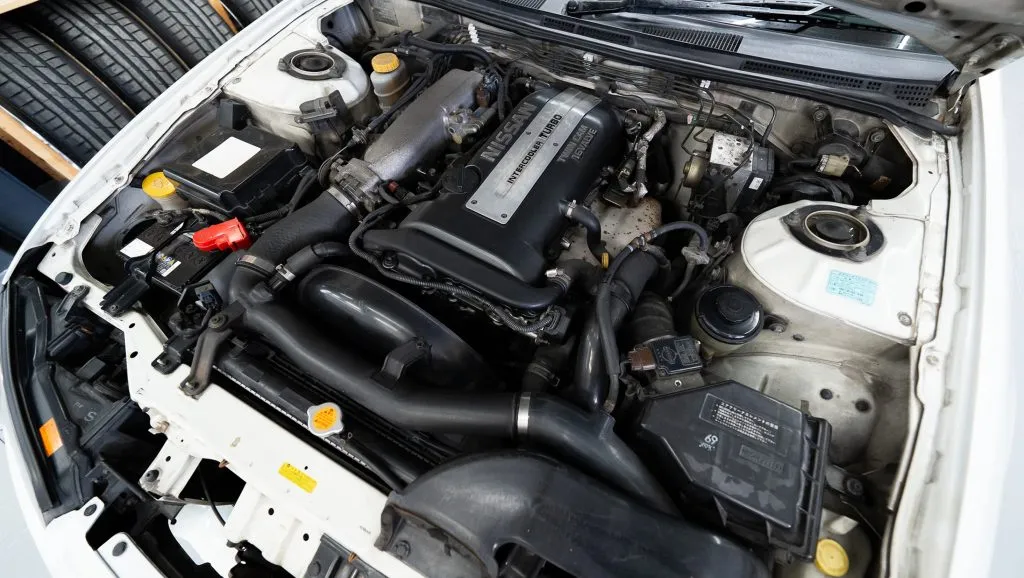
The SR20DET Engine: Strengths, Weaknesses and What to Look For
The SR20DET is one of the most celebrated Japanese performance engines of the modern era, and for good reason. In well-maintained, standard-specification form it is a fundamentally strong, tuneable and rewarding unit. However, the S15 is now well over twenty years old, and any engine of that age has the potential to carry the accumulated consequences of decades of ownership, whether those are the results of hard driving, deferred maintenance, or simply the passage of time.
Understanding what to look for before you bid or commit to a purchase is essential.
Oil System and Lubrication
Oil-related issues are the most common cause of premature SR20DET failure, and the vast majority of those issues are avoidable with proper maintenance and inspection. The standard oil sump lacks any form of baffling, which means that during sustained hard cornering, acceleration or braking, the oil can surge away from the pickup tube and cause a momentary loss of oil pressure. In a road car driven sensibly this is rarely an issue. In cars that have seen sustained track or drift use, this surge can cause partial bearing failure over time, and the damage is often invisible on a casual visual inspection.
On any S15 with a performance history, ask specifically whether a baffled sump or oil surge tank has been fitted. If not, and the car has demonstrably been driven hard, a compression and oil pressure test before purchase is not optional, it is essential.
High oil consumption can also indicate worn piston rings or valve stem seals, both of which become increasingly common on high-mileage examples. Blue smoke on startup that clears quickly suggests valve stem seals. Blue smoke under load or sustained blue smoke at idle points toward ring wear, which is a significantly more involved repair.
Head Gasket
Head gasket failures are a known characteristic of the SR20DET when the engine has been subjected to sustained high boost running without appropriate cooling upgrades. A standard head gasket on a standard-specification engine running factory boost is generally reliable. However, given the age of these cars and the ease with which previous owners could have modified boost levels without supporting the cooling system, buyers should always be alert to the signs.
White smoke from the exhaust, particularly when the engine is warm, should immediately raise questions. A cooling system that requires frequent top-ups, an unexplained rise in coolant temperature or a milky residue on the underside of the oil filler cap are all potential indicators of coolant contamination. None of these symptoms should be dismissed.
Timing Chain
The SR20DET uses a timing chain rather than a belt, which removes the need for scheduled replacement intervals, but this does not mean the chain is maintenance-free. High mileage examples and engines that have run with degraded or infrequent oil changes can develop chain stretch, which manifests as a rattling sound on cold starts that typically clears as oil pressure builds. If the rattle persists once the engine is warm, budget for a chain replacement before purchase or factor it into your negotiation.
Turbocharger
The standard T28 turbocharger fitted to S15 Spec R models is a modest but durable unit in standard specification. Age and sustained hard use will eventually cause wear in the shaft bearings, and a worn turbo will present as excessive play in the shaft when checked by hand, smoke under boost or an unusual whistling note. Genuine Nissan T28 rebuilds are available and relatively affordable, but any car presented as unmolested that shows turbo wear raises a broader question about how it was driven and maintained.
On modified cars running larger turbochargers, the quality and age of the installation matters enormously. Poorly routed oil and coolant feeds, heat management issues around upgraded turbos and sloppy intercooler pipework are all common on amateur builds and can create problems that take time and money to resolve properly.
IACV, MAF and Sensors
The idle air control valve is a well-documented weak point on the SR20DET and becomes increasingly problematic with age. An S15 that idles unevenly, hunts at idle or stalls when coming to a stop is often exhibiting a failing IACV. The good news is that cleaning or replacing it is a relatively straightforward and inexpensive job. The mass airflow sensor is another common failure point, typically presenting as rough running, poor throttle response or intermittent misfire-like symptoms, particularly during warm-up.
The crank angle sensor, known in the Nissan community as the CAS, can cause no-start conditions and erratic running when it begins to fail. It is worth running a fault code check on any purchase candidate before committing to a bid.
Known Problem Areas: What to Look for on Every S15
Rust and Corrosion
Rust is the defining concern when buying any Japanese sports car of this era, and the S15 is not immune. Japanese domestic examples have a significant advantage over their exported counterparts in that Japan's vehicle inspection system, the shaken, requires structural integrity checks that discourage neglect, but even well-maintained examples will eventually show corrosion in specific areas as they age.
The rear wheel arches are the first place to check on any S15. This is where road debris gathers behind the plastic arch liner and accelerates corrosion on the inner and outer metalwork. Surface rust here can usually be managed, but bubbling paintwork or soft metal indicates a more significant problem. The sill sections running along the base of the car deserve equal attention. Lift any rubber trim at the edges of the sills and inspect what lies beneath. Rust in the sills can compromise the structural rigidity of the car and is expensive to repair properly.
The floor pan, accessible from underneath the vehicle, should be inspected along its full length. Perforations in the floor, particularly around drain plug areas and towards the rear of the cabin, are a known issue on older examples. The boot floor and spare wheel well should also be checked thoroughly, as water ingress around tail lamp seals and boot lid weatherstripping can cause hidden corrosion that only becomes apparent when the carpet is lifted.
Front subframe mounting points and rear suspension pickup points should be checked on any car with a sporting history, as these areas are particularly susceptible to stress cracking and corrosion when the car has been lowered on aftermarket suspension or subjected to regular track use.
On modified drift cars, inspect the firewall and chassis rails carefully. Bent or repaired chassis rails, welded reinforcements that don't look factory and signs of structural repair around the front strut towers are all indicators of accident damage or serious crash repairs.
Gearbox and Drivetrain
The six-speed gearbox fitted to S15 Spec R models is a strong unit in standard specification, but second and third gear synchros are the most common wear points on high-mileage or hard-driven examples. A car that crunches or resists when shifting into second gear under hard acceleration, or refuses to engage cleanly when cold, should be treated with caution. A full gearbox rebuild is a significant expense.
The helical LSD fitted as standard to the Spec R is generally durable, but cars that have been used extensively on track or in drift environments can wear the differential mechanism to the point where it no longer provides meaningful drive on both rear wheels. During a test where safe to do so, any tendency for one rear wheel to spin without driving the other indicates a worn or damaged differential.
The propshaft centre bearing is another wear point that becomes evident as vibration through the drivetrain, particularly at motorway speeds. The clutch on high-mileage Spec R examples should be checked for slip under heavy acceleration, and the hydraulic clutch system should be inspected for leaks at both the master and slave cylinder.
Suspension and Steering
Factory suspension components on any twenty-year-old vehicle will be showing wear, and the S15 is no exception. Original rubber suspension bushes degrade over time, causing vagueness in handling, clunking over bumps and increased tyre wear. Rear subframe bushes in particular are a known wear item on the S15 and can cause significant degradation in rear end precision when they collapse.
On cars that have been lowered on aftermarket coilovers, inspect the condition of the coilover seals and damper bodies carefully. Budget coilovers from the early 2000s that have never been serviced are often well past their useful life, and the cost of fitting quality replacements should be factored into any purchase budget accordingly.
Steering rack condition should be verified by checking for any tendency to pull to one side, excessive play through the steering wheel and for power steering fluid leaks on cars equipped with the standard system.
Interior and Electrical
The S15 interior has generally aged well by Japanese standards, but there are specific areas worth checking. Power window motors, particularly on the driver's side, are a common failure item on older examples. The climate control system and air conditioning compressor should be verified as functional, as these are becoming increasingly difficult to source in original specification.
Electrical issues most commonly manifest in the instrument cluster on high-mileage cars, with speedometer and fuel gauge erratic behaviour both reported by long-term owners. The wiring harness on heavily modified examples should be inspected carefully for signs of amateur work, cut and spliced wires or non-standard connections that could mask underlying problems or create new ones over time.
Any car fitted with an aftermarket ECU should be accompanied by documentation confirming the map has been professionally calibrated. An improperly mapped engine management system can cause issues ranging from poor performance to serious mechanical damage over time.
List of Common Problem Areas at a Glance
One of the most important sections of this Nissan Silvia S15 Buyers Guide is understanding the common mechanical issues before placing a bid. Rather than discovering issues after purchase, any serious S15 buyer should commission an independent pre-purchase inspection covering these specific areas.
The rear wheel arches and sill sections deserve thorough rust inspection before anything else. The SR20DET oil system, head gasket condition and timing chain should be verified mechanically. The six-speed gearbox synchros and LSD condition need to be checked under driving conditions. Suspension bushing wear, coilover condition and rear subframe integrity are all critical on sporting examples. Electrical systems including the IACV, MAF, CAS and ECU calibration should all be verified. On modified cars, the quality and safety of all aftermarket installations requires professional assessment.
At Autoselecta, every vehicle we are asked to bid on receives a full pre-purchase inspection report from independent Japanese assessors, giving you a clear picture of exactly what you are buying before any money changes hands.
Understanding Auction Grades and What They Mean for Your Budget
Japanese auction grading is the most reliable independent assessment tool available to overseas buyers, and understanding how the grading system works will fundamentally change how you approach the market.
Grades run from 1 at the lowest end through to 6 at the highest, with half-point grades including the critically important 4.5 adding further granularity to the assessment. The grade reflects the overall condition of the vehicle, taking into account bodywork, interior, mechanical presentation and any documented repairs or modifications.
A grade 6 car is effectively a new vehicle with delivery mileage, and while these exist within the auction system, finding a Silvia S15 at grade 6 in today's market would be extraordinary. Grade 5 denotes a near-new example with very low mileage and perhaps a minor mark or two noted on the auction sheet, cars that present as pristine and carry an equally pristine price to match.
Given that the S15 is now well over two decades old, grade 3.5 is actually the most common grade you will encounter across the auction system, representing a car with honest age-related wear and perhaps some light cosmetic history. Grade 4 is genuinely very good for a car of this era, indicating clean bodywork, sound mechanicals and a presentable interior. Grade 4.5, the point where serious collector interest begins to compete hardest, is increasingly rare precisely because these cars are ageing and the pool of examples that can sustain that assessment continues to shrink. Finding a grade 4.5 S15 today means you are looking at a car that has been exceptionally well kept across its entire life, and the market prices those examples accordingly.
It is also worth understanding the R grade designation, which indicates a car with previous bodywork repairs or aftermarket modifications noted on the auction sheet. An R grading does not automatically make a car undesirable. Many R-graded S15s are wonderful enthusiast buys, particularly those where the notation refers to a quality professional respray, sympathetic cosmetic modification or a well-executed period upgrade rather than accident damage. The key is knowing exactly what the R refers to, and that is where a full translated auction sheet and an independent inspection report become invaluable.
Grade 4.5 is where the market for serious S15 buyers currently centres. These are excellent cars with perhaps minor cosmetic imperfections that do not compromise the overall quality or desirability of the vehicle. Based on auction data from the past three months, grade 4.5 Nissan Silvia S15 examples are now consistently achieving prices at or above the £35,000 mark, reflecting the growing worldwide recognition of the S15 as a genuine collector car and the accelerating interest from international markets, most significantly the United States.
Grade 4 examples represent good clean cars with more noticeable cosmetic wear or minor historical repairs, and these can offer genuine value for buyers prepared to accept light imperfections or undertake some work. Grade 3.5 and below begins to introduce more significant concerns that will require careful evaluation, and anything below a 3 typically indicates either heavy modification, accident history or both.
The encouraging news for buyers working with a more flexible budget is that S15s can still be sourced in Japan from as low as £15,000 for project-grade examples and modified cars that require attention. These vehicles carry risk proportional to their price, but for a buyer with mechanical knowledge and a clear plan, they can represent an accessible entry point to the platform. Autoselecta provides full inspection reports on every vehicle you express interest in regardless of grade, ensuring that you always know precisely what you are committing to before you bid.
Japanese Auction Grades Explained
Why USA Demand Is About to Change Everything
One of the most significant forces now shaping the global Nissan Silvia S15 market is the United States. American import legislation permits the import of vehicles that are 25 years or older, and as the youngest S15 examples approach that threshold during the mid-2020s, the flood of American demand that has already begun to surface in auction markets across Japan is set to intensify dramatically.
The American market for Japanese domestic vehicles has a history of reshaping values almost overnight. The Nissan Skyline GT-R, the Toyota Supra and the Honda NSX all experienced significant price acceleration as US buyers entered their respective markets, and there is broad consensus among Japanese car specialists that the S15 will follow a very similar trajectory.
Buyers in the USA are already searching actively for clean Spec R examples in particular, with low-mileage turbo manual cars in rare colours commanding the sharpest premiums. Factory Aero specification cars and dealer-maintained examples with documented history are attracting the most competitive bidding. The window for securing a genuinely exceptional S15 at current prices is narrowing with every auction season, and buyers who delay risk paying substantially more for equivalent cars in the near future.
Famous Nissan Silvia Tuning Houses
No guide to the Nissan Silvia S15 would be complete without acknowledging the Japanese tuning culture that shaped so much of the car's identity and continues to add value to specific examples today.
Companies including Vertex, Origin Labo, BN Sports, URAS, D-Max, Trust Greddy, HKS, Top Secret, VeilSide and GP Sports built their reputations in significant part on the S-chassis Nissan platform, producing aero kits, engine packages, suspension solutions and complete builds that represented the absolute pinnacle of Japanese performance tuning during the early 2000s golden era.
Genuine period-correct builds carrying original aero from these houses are increasingly being recognised as collectible in their own right. A correctly documented Trust Greddy or Top Secret build in good condition tells a story that transcends simple performance modification, and the global appetite for authentic period JDM cars means that well-executed examples from respected houses command meaningful premiums over standard comparable cars.
The key word is authentic. Many cars presented as complete tuner builds are in fact partial or non-original reproductions of famous configurations. Autoselecta has the expertise to assess period modification claims accurately and advise buyers on whether what they are looking at is the real thing.
Original Cars Versus Modified Builds: Which Is Right for You?
The S15 market today divides reasonably clearly into two distinct buyer profiles, and understanding which camp you fall into before you begin your search will save considerable time and money.
Collector-grade buyers seeking factory original, low-mileage, unmolested examples are chasing a diminishing pool of cars. Prices for truly exceptional standard examples are rising fastest of all and show no sign of reversing. If you want an S15 as an investment or a clean driver that you intend to preserve, the advice is simple: buy the best car you can afford now.
Modified car buyers seeking a complete or near-complete performance or drift build are operating in a different market. Here the value equation is more complex. A well-built, correctly specified modified S15 on quality parts with a documented build history and professional tuning can represent excellent value compared to building one yourself from scratch. A poorly built car with layered modifications, unknown history and amateur workmanship can consume far more money to correct than the initial purchase saving would suggest.
Autoselecta works with both types of buyer. We translate every auction sheet in full, explain every notation and flag every concern before a single bid is placed, so you are never bidding blind on either a clean car or a modified one.
What the Autoselecta Service Means for S15 Buyers
Autoselecta was built specifically to remove the complexity, uncertainty and unnecessary cost from buying Japanese cars abroad. Instead of navigating language barriers, unfamiliar auction systems and opaque pricing structures through layers of intermediaries, buyers access Japanese auction halls directly through a single transparent platform with a fixed service fee and no hidden costs.
We access upcoming auction listings before most buyers overseas are even aware the cars exist. We translate every auction report in full, explaining every marking, grade notation and condition detail in plain language. We arrange independent physical inspections on vehicles you want assessed before bidding. We manage the full shipping process from Japan to your destination port, handling all import documentation, customs coordination and logistics. For UK buyers we can advise on DVLA registration, and for international buyers we work with established agents in each market to ensure smooth delivery.
The practical result is that buyers regularly secure S15s at prices that represent meaningful savings compared to equivalent cars purchased through UK-based specialist importers or through domestic dealers in other markets who have already applied their own margins on top of Japanese auction prices.
Begin Your Nissan Silvia S15 Search with Autoselecta
Whether you are searching for a pristine collector-grade Spec R, a clean original Spec S, a finished performance build or a project car to develop on your own terms, Autoselecta gives you direct access to the widest and deepest selection of Nissan Silvia S15s available anywhere outside Japan.
Browse our current listings, request an inspection on any car that interests you, or speak with our team directly about what you are looking for. We know the S15 market in detail and we know how to find the right car at the right price.
Browse live Japanese auctions here:

Speak with the Autoselecta team directly and discover how simple importing from Japan can really be.
WhatsApp: +44 7908 911 247 wa.me/447908911247
Email: hello@autoselecta.com
Follow Autoselecta for daily Japanese auction vehicles, behind the scenes importing content, sold prices and rare stock updates from Japan.