



Overview of the Subaru Impreza WRX STi Spec C Limited
This is a May 2003 Subaru Impreza WRX STi Spec C Limited, chassis code GH-GDB, finished in original blue (colour code 02C) and offered at USS Tokyo as lot 10055. It carries a 2.0 litre turbocharged flat four, a six speed manual gearbox and four wheel drive, and the sheet records 56,645 km, which is approximately 35,199 miles. The auction grade is 4, the interior grade is B, and shaken (Japanese inspection) runs until 26 May 2028.
The Spec C is the stripped, competition minded branch of the Blobeye STI family, and a Limited example with a new car service book and warranty booklet is the sort of Subaru that enthusiasts search for. It is not a standard car, though. The sheet lists coilovers, a Japanese performance exhaust, an aftermarket steering wheel, 18 inch wheels and more, so this one will suit a buyer who wants a modified, driver focused Subaru rather than a time capsule.
The Drive Review
The GDB STI is built around the EJ207, a 2.0 litre turbocharged boxer engine. In Japan it was rated at the 280 PS ceiling of the time, and it delivers its boost with a hard, slightly lumpy rush and the burble that defines the Subaru sound. The six speed manual has a short, mechanical action, and the Spec C was always the version aimed at drivers who valued response and mechanical feel over comfort.
Four wheel drive with the driver controlled centre differential, shown by the DCCD indicator in the instrument cluster photograph, lets you tune how power is split front to rear. On a wet road the car pulls out of corners with a grip and traction that few cars of its era could match, while the steering is direct and full of feedback. It feels very different from a modern performance car: no stability nannies, no driving modes, just a loud, connected and rather raw machine.
This car's changes will alter that character. Adjustable coilovers, 18 inch Pro Drive wheels and a freer breathing exhaust and air cleaner should make it sharper and louder than stock. How it is set up and tuned is not stated on the sheet, so a buyer should expect to check the alignment, damper settings and engine mapping after arrival.
Auction Details
The car runs at USS Tokyo on 15 October 2026 (Japan date), in the M T corner, lot number 10055. The sheet gives the auction grade as 4 and the interior grade as B. The auction start price is ¥1,980,000. The Autoselecta guide bidding range is £5,500 to £7,000. That range is an estimated guide to where bidding may land, not a guaranteed purchase price, and there is no promise the car will sell within it. For the minimum bid and the landed cost to your country, please refer to the price panel on this page, which is calculated live.
All bids must be submitted before 9PM UK time the evening before auction. For this lot that means by 9pm UK time on Wednesday 14 October.
Vehicle Specifications
Manufacturer and model: Subaru Impreza WRX STi Spec C Limited. Chassis code: GH-GDB, frame number GDB-021823. First registration: May 2003 (Heisei 15). Body: four door hardtop saloon, five seats. Engine: 2,000 cc turbocharged petrol. Transmission: six speed floor manual. Drive: 4WD. Exterior: blue, original colour with no colour change, code 02C. Interior: black. Dimensions on the sheet: length 447 cm, width 187 cm, height 140 cm. Mileage: 56,645 km, approximately 35,199 miles; the cluster photograph shows a reading very close to this. Registration plate: Mito 302 te 9357. Recycling deposit: 12,990 yen. The sheet does not mark the steering side, but the photographs show the steering wheel on the right, as expected for a Japanese market car.
Factory Features and Equipment
The equipment box marks power steering, power windows and air conditioning. Airbag is circled, but the inspector confirms the airbag is missing because an aftermarket steering wheel has been fitted. The sheet lists a new car service book with warranty as present, and the sales points also name the new car warranty booklet and owner's manual. A limited edition, special specification is noted, together with the STI rear spoiler and STI suspension arms. A spare key, navigation and ETC are not mentioned on the sheet and are not confirmed.
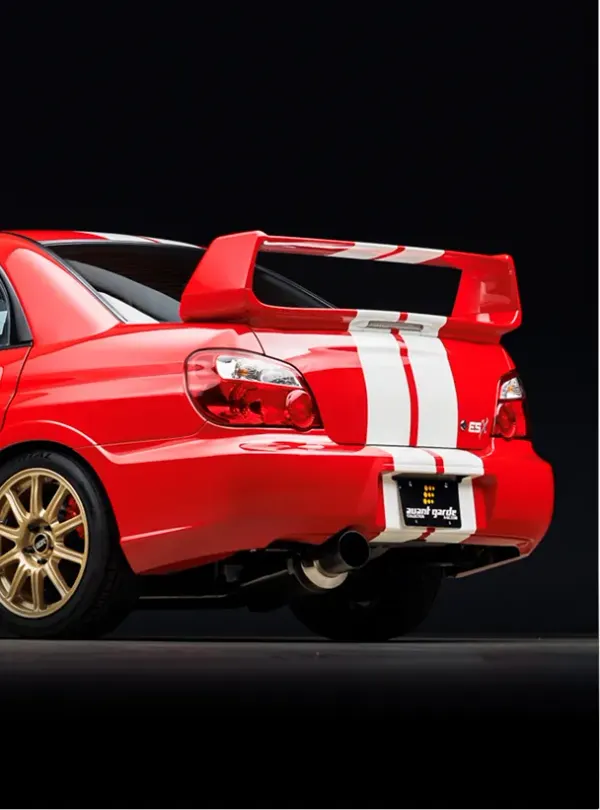
The photographs show an aftermarket head unit in the centre console, a triple gauge pod on top of the dash, a Recaro marked seat and a large wing on the boot lid, a bonnet scoop and STI badging on the front bumper.
Japanese Auction Report Translation
The inspector's report, translated and checked by Autoselecta, reads as follows. Items are missing from the spare (tyre) housing, though this reading is not certain. The cabin is scuffed with some dirt and scratches. The aftermarket steering wheel has no airbag. There is rust on the underside. Various scratches and dents have been repaired. The wheels are scratched.
The sales points list the new car warranty booklet and owner's manual, limited edition special specification, STI rear spoiler, STI arms, an intercooler water spray, an A'Pexi silencer, catalytic converter and air cleaner, an aftermarket steering wheel and modified (rolled) wheel arches. The points to note list STI triple additional gauges for water temperature, oil temperature and oil pressure, A'Pexi coilover suspension, Pro Drive 18 inch alloy wheels, and a wheel PCD changed to 114.3 with other parts included. Usage history, transfer document expiry and the imported car section are blank.
The circled mark beside the spare label shows a spare is missing. It is most likely the spare tyre, but the sheet reading is not certain and it could refer to the spare key. No fault is recorded for the engine, gearbox or air conditioning, but that does not replace a mechanical inspection.
Damage Diagram and Body Condition
The front bumper shows scuff scratches. The bonnet carries a W2 mark, a repair mark or panel wave. The windscreen has stone chips. The left front door has a U2, a dent. The roof has a U1, a small dent. The right front door, right rear door, left rear quarter panel, right rear quarter panel and the boot lid or rear all carry W2 marks, so those panels show repair marks or waves, which in this case support the inspector's note of various repaired scratches and dents. There is also an A1 small scratch, which appears to be on the right side sill between the doors, though that reading is not certain.
In plain terms, this is a car that has had paintwork and bodywork repaired on several panels. The photographs show bright, well presented blue paint, and the sheet does not mention accident or structural repair. Still, a buyer should treat the number of W2 marks seriously and ask for close inspection photographs. Underbody rust is noted separately and is the most important physical warning on the sheet. Overall this reads as a usable enthusiast car with cosmetic and corrosion points to be addressed, not a collector grade example.
Interior Condition
The interior is black and graded B. The inspector records scuffing in the cabin with some dirt and scratches. In the photographs the dash looks tidy, with a gauge pod, an aftermarket stereo, a metal trimmed shift surround and a fabric rear seat visible. The steering wheel is an aftermarket item with no airbag. Seat wear, headlining, smoke and odour are not mentioned on the sheet and are not confirmed.
Japanese Auction Grades
Grade 4 is a good overall score on the Japanese scale, usually meaning above average condition for the age, though not a showroom car. Interior grade B sits a step below the best and fits the scuffs noted here. The exterior also reads 4 in the feed.
Model History
The GDB is the second generation of the Impreza STI, sold from 2000, with this car belonging to the Blobeye era that followed the Bugeye. Subaru Tecnica International developed the STI versions, and the cars grew out of the brand's World Rally Championship programme. The Spec C removed comfort and weight to suit competition and track use, and the Limited label marks a special run within that family. Compared with the regular STI, the Spec C emphasised a more focused chassis and a lean specification.
Why This Model Has Become Collectible
The Blobeye STI has become collectible because it joins rally heritage, a manual gearbox, a turbocharged boxer engine and four wheel drive in a package that cannot be built again in the same way. Clean, unmodified examples are becoming scarce because so many were driven hard, tuned or crashed. Spec C versions are especially sought after, and demand is global. This car is modified, which can lower its appeal to originality purists but widens it for those wanting a ready built driver's car. No future value can be promised.
What To Look For When Buying This Model
The EJ207 is strong in standard form but does not forgive abuse, so ask about oil changes, listen for knocking on a cold start and check oil pressure behaviour. This car has a modified exhaust, air cleaner and intercooler spray, so ask what engine tune it runs and whether a map exists. Turbo shaft play and oil leaks around the boxer's seals and the pulleys are worth checking. Check gearbox synchros, especially under hard shifts, plus the clutch, rear differential and DCCD operation.
This sheet points you to four things. First, the underbody rust, so request underside photographs and look at the sills, subframes and rear arches. Second, the repaired panels, so look for paint thickness differences and signs of old impact. Third, the hubs and wheels, because the PCD has been changed to 114.3 and the 18 inch wheels are scratched; confirm what hardware was used and that the brakes clear the wheels. Fourth, the steering wheel with no airbag, which may affect road legality in your country.
Why Import This Car From Japan
Japan is where the best Spec C cars were sold, and domestic examples often come with books and clear records, as this one does with its new car service book. An auction sheet lets you read an independent inspection before you commit, which is rarely available on a used Subaru bought elsewhere. At just over 15 years old, this car may also be eligible in countries with an age based rule, such as Canada, but you should confirm your own rules first.
Ultimate Guide For Japanese Imports
The process runs from choosing a car and bidding, through payment and export documents, to shipping, customs clearance and registration in your country. Always check import, emissions and safety rules where you live before you bid, and allow for any work needed after arrival.
Why Import Through Autoselecta
Autoselecta gives you direct access to Japanese auctions, translated and checked auction sheets, sourcing, bidding assistance, export handling, shipping, import support and vehicle tracking where available, with clear communication throughout. We help you through arrival and import steps in your own country without making unrealistic savings claims.
Browse This Week's Japanese Auctions
If this Impreza is not quite right, browse this week's Japanese auction listings for other STI models, GDB and GC8 cars and similar performance saloons.
Live Auction Search
Use the live auction search to filter by make, model, grade, mileage and price, and bring any lot to us for a translation and bidding guidance.
Auction Caution
Auction cars are inspected before sale but remain used vehicles. An auction sheet is an independent condition guide, not a mechanical warranty. An older modified performance car like this may need servicing, maintenance or refurbishment after purchase. Please keep the inspector's warnings in mind: rust on the underside, items missing from the spare housing, a missing spare, an aftermarket steering wheel with no airbag, scuffed cabin trim, scratched wheels, several W2 repaired panels, dents on the left front door and roof, stone chips on the windscreen and a scuffed front bumper.


