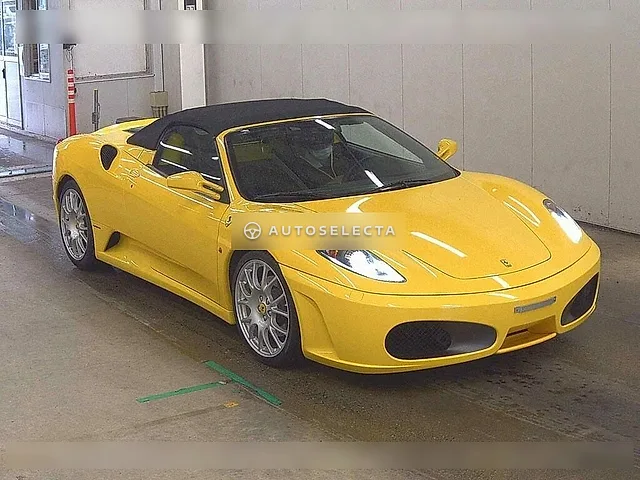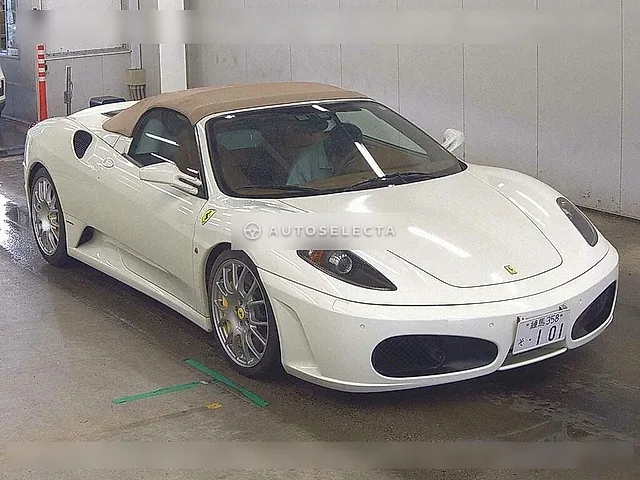








Overview of the Ferrari F430 Spider
This is a February 2008 Ferrari F430 Spider, finished in red with a tan leather interior and the F1 paddle shift transmission. The chassis code shown on the Japanese auction sheet is ABA-F430S, and the frame number is recorded as ZFFEZ59J000155848. It was imported new by an official Ferrari dealer, has covered 18,800 km according to the auction sheet odometer, which converts to approximately 11,682 miles, and is presented with one owner and a run of Japanese dealer service records stretching from 2010 through to 2025. The car carries an auction grade of 4.5 with an interior grade of B, which for a Ferrari of this age and value is a strong result. It is offered through USS Yokohama under lot number 84001, with the Japanese auction taking place on 29 September 2026. All bids must be submitted before 9PM UK time the evening before auction.
The Ferrari F430 Spider sits at an interesting point in Ferrari history. It is the last of the analogue feeling V8 Ferraris before electronic driver aids and downsized turbocharged engines took over, yet it is modern enough to be usable, reliable and comfortable by classic Ferrari standards. This particular car is further lifted by a genuine sales point on the auction sheet: it is fitted with carbon ceramic brakes, carbon engine bay parts, a rear carbon Challenge grille and racing seats, features that were expensive factory options when new and remain highly desirable in the used market today.
The Drive Review
The F430 uses Ferrari's naturally aspirated 4.3 litre V8, the F136 engine developed jointly with Maserati, producing peak power high in the rev range and delivering a genuinely intoxicating soundtrack as it climbs towards its red line, which on the yellow faced rev counter noted on this car's auction sheet sits close to 8500rpm. There is no turbo lag, no artificial induction noise, just a linear, mechanical build of power that rewards being worked hard. In this F1 specification the car uses Ferrari's electrohydraulic paddle shift gearbox rather than the traditional open gate manual. It is quicker shifting than the manual and part of what made Ferrari ownership more accessible in period, though enthusiasts should be aware that the actuation is noticeably firmer and less smooth than a modern dual clutch system, part of the F430's mechanical charm rather than a flaw.
The steering is hydraulically assisted rather than electric, and it is one of the most talked about traits of the F430 among owners and journalists alike, offering feel and precision that later electrically assisted Ferraris struggle to match. The chassis uses double wishbone suspension all round with Ferrari's manettino control on the steering wheel to adjust damping and traction settings, allowing the driver to soften the car for road use or sharpen everything for a track. As a Spider, the F430 loses a little structural rigidity compared with the Berlinetta coupe, but Ferrari reinforced the sills and floor to compensate, and in daily use the roof mechanism folds away in around twenty seconds, transforming the car from a closed cockpit into an open top V8 Ferrari with minimal compromise. This particular example benefits from carbon ceramic brakes, a factory option that sharpens pedal feel, reduces unsprung weight and resists fade far better than the standard steel brakes, making it a genuinely desirable specification for spirited driving.
Auction Details
This Ferrari F430 Spider is being offered through USS Yokohama, one of Japan's most established auction houses, under lot number 84001. The auction is scheduled for 29 September 2026 in Japan, and all bids must be submitted before 9PM UK time the evening before auction. The auction start price is set at ¥10,000,000. Autoselecta has not set a specific guide bidding range for this car, so please refer to the live price panel on this page for current bidding information and the buying price once available. It is worth noting that recent Japanese auction results have shown a similar F430 Spider selling within the region of £41,515, though this reflects a single result across other versions and conditions and should be treated only as broad market context rather than a valuation of this specific car.
Vehicle Specifications
Manufacturer Ferrari, model F430 Spider, grade F1, chassis code F430S with the full Japanese designation ABA-F430S, frame number ZFFEZ59J000155848. First registered February 2008 under the Japanese Heisei 20 calendar. Engine capacity 4300cc, fuel petrol, transmission FAT floor automatic with F1 paddle shift control, drive layout 2WD, rear wheel drive. Exterior colour red, noted on the sheet as the original factory colour with no colour change recorded. Interior finished in tan leather. Odometer reading 18,800 km, approximately 11,682 miles. Auction grade 4.5, interior grade B. Steering position left hand drive. Body dimensions recorded as 451cm length, 192cm width and 124cm height. Japanese roadworthiness certificate, known as shaken, valid until 2 July 2027.
Factory Features and Equipment
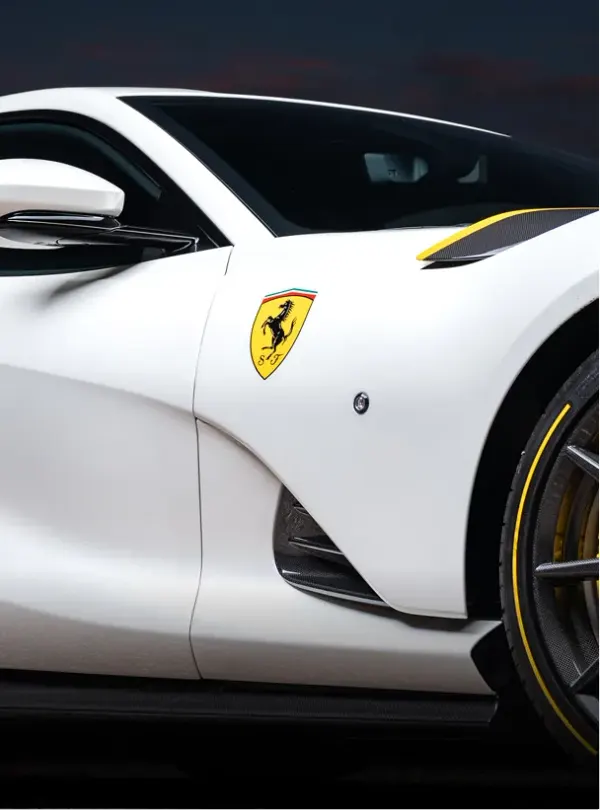
The auction sheet confirms genuine Ferrari alloy wheels, power steering, power windows, leather upholstery and airbags as standard equipment. Air conditioning is fitted and marked as functioning. Beyond the standard specification, this car carries a notable list of factory sales points recorded by the auction house, including carbon ceramic brakes, carbon fibre engine bay trim parts, a rear carbon Challenge style grille, racing seats and a red interior detail referred to on the sheet as MUGELLO, most likely relating to the Rosso Mugello colour theme, though this is not confirmed with certainty. The car also carries Scuderia Ferrari shield badges and the distinctive yellow faced rev counter, both desirable factory details on F430 models of this era.
Japanese Auction Report Translation
The auction sheet identifies this as lot 84001, listed in the imported car prime corner section. The chassis code is given as ABA-F430S, engine size 4300cc, model name Ferrari F430 Spider, body type OP for open top, grade F1, drive 2WD. The auction grade is recorded as 4.5 with an interior auxiliary grade of B. First registration is shown as February of Heisei 20, which is February 2008, and the shaken roadworthiness certificate runs to 2 July of Reiwa 9, which is 2 July 2027. The transmission is listed as FAT, floor automatic with F1 paddle control. Recorded mileage is 18,800 km. Air conditioning is marked as fitted and working. The exterior colour is listed as the original factory red with no colour change indicated. Fuel type is petrol. The sheet confirms a new car service book with warranty booklet is present, circled to indicate this is held with the car. Import type is listed as dealer, meaning this was an official Japanese dealer import rather than a private grey import. Steering is left hand drive. A recycling deposit of 19,910 yen is noted, which is standard Japanese practice and simply relates to registration of the vehicle's recycling fee rather than any fault.
Equipment marks confirm genuine alloy wheels, power steering, power windows, leather trim and airbags. Under sales points the sheet lists carbon ceramic brakes, carbon engine bay parts, a rear carbon Challenge grille, the red MUGELLO interior reference, racing seats and one owner history. Under points to note, the sheet states the interior and exterior have been prepared or finished ahead of sale, confirms one owner from new, and lists service records present for the years 2010, 2011, 2013, 2015, 2017, 2019, 2021, 2023 and 2025, a genuinely comprehensive maintenance trail for a car of this age. The yellow rev counter and Scuderia Ferrari shield badges are also noted here. A further note states that the owner's manual, warranty booklet and key are to be sent separately after the sale, referred to in Japanese shorthand as 後送, though this specific arrangement is not certain in its full detail and should be confirmed directly.
The inspector's own report notes that some switches are sticky to operate and cracked, that the seats show creasing consistent with use, that a dashboard panel is lifting slightly, and that there are stone chip scratches around the front of the car. These are all straightforward, honest observations typical of a well used but genuine example, rather than signs of accident damage or neglect.
Damage Diagram and Body Condition
The damage diagram marks a scratch with scuffing at the front bumper, described on the sheet using the codes A and スリA together, indicating a scratch that has also scuffed the paint surface. A further scratch, marked simply A, is recorded on the bonnet or front lid. A mark described as トビA is drawn towards the front of the cabin outline, most likely relating to the windscreen surround or cowl area, and appears to describe stone chips accompanied by a scratch, though the exact panel is not entirely certain from the diagram alone. Four separate A1 codes, denoting small scratches, are marked along the left and right sides of the car, at both an upper and a lower position on each side. These are drawn against the side strip areas of the diagram and most likely correspond to the door and sill panels, though the precise panel cannot be confirmed with full certainty from the sheet. A further scratch with scuffing, marked A1 alongside スリA, appears at the rear bumper. The spare tyre position on the diagram is marked but shows no damage code against it.
Taken together, this pattern of markings describes a car with typical light cosmetic wear consistent with genuine, ongoing use rather than any structural or accident related damage. There is no W, U, B, S, C or XX code present anywhere on the sheet, meaning there is no indication of dents, corrosion, rust, replaced panels or repaired panelwork recorded by the inspector. The photographs show a straight, glossy red body with no visible panel misalignment, and the overall auction grade of 4.5 supports the assessment of a genuinely good, usable example rather than a car requiring restoration. This is best described as a well presented, honestly graded Ferrari showing light cosmetic marks appropriate to a seventeen year old car with 18,800 km on the clock, rather than a concours or collector grade example.
Interior Condition
The interior is trimmed in tan leather and carries an interior grade of B on the Japanese scale, indicating some visible wear consistent with genuine use rather than a near perfect cabin. This matches the inspector's own written notes, which record some sticky and cracked switches, creasing to the seats, and a dashboard panel that is lifting slightly, likely a trim adhesion issue rather than anything structural. The photographs show the racing style seats referenced on the sales points list, along with the yellow faced rev counter, Scuderia Ferrari shields on the steering wheel and dashboard, and carbon fibre trim detailing to the centre console. Protective plastic coverings are visible over parts of the interior in the photographs, along with dealer preparation paperwork, both typical of a car being readied for auction rather than a fault of any kind. Air conditioning is confirmed as fitted and functioning on the auction sheet.
Japanese Auction Grades
Japanese auction grades run on a scale most commonly seen from around 3 up to 6, with higher numbers indicating better original condition. A grade of 4.5, as recorded here, generally reflects a genuinely good, largely original car with only minor cosmetic wear, sitting comfortably above the more common 3.5 to 4 grade band and below the rare near flawless 5 and above examples. The interior grade of B on a scale that runs from A down through B, C and D indicates a cabin with light to moderate wear, again consistent with genuine use rather than abuse or neglect. These grades are assigned by an independent, experienced inspector working for the auction house, rather than by the seller, which is why Japanese auction sheets are widely trusted internationally as an honest, third party condition record.
Model History
The Ferrari F430 was introduced in 2004 as the successor to the 360 Modena, sharing its aluminium spaceframe architecture but with a substantially revised design, a larger 4.3 litre version of Ferrari's V8 engine, and technology borrowed directly from Formula 1, including the E-Diff electronic differential and the manettino control system. The Spider version followed shortly after the Berlinetta coupe, offering the same underlying engineering with a folding soft top roof. Production continued until 2009, when the F430 was replaced by the 458 Italia, and the F430 remains widely regarded as the last of Ferrari's naturally aspirated, analogue feeling mid engine V8 cars built before electric power steering and, eventually, turbocharging changed the character of the range entirely.
Why This Model Has Become Collectible
The F430 Spider has steadily grown in appeal among collectors and enthusiasts for several reasons. It represents the final generation of Ferrari V8 built with fully hydraulic steering and a naturally aspirated engine, a combination increasingly valued as later cars moved to electric assistance and turbocharging. The F1 paddle shift transmission fitted to this car was a genuine technological step for its era, drawing directly on Ferrari's Formula 1 program, and cars fitted with desirable factory options such as carbon ceramic brakes, as seen on this example, are particularly sought after because they combine period correct engineering with genuine performance benefit. Well documented, low mileage examples with a clear ownership and service history, such as this one owner car with service records spanning 2010 to 2025, are becoming harder to find, particularly from the Japanese domestic market where cars are typically well maintained and carefully used. Japan has long been a strong market for well kept exotic imports, and sourcing a genuine, honestly graded example directly from a Japanese auction house remains one of the more reliable ways to find a Ferrari F430 Spider that has not suffered the wear, modification or questionable history sometimes found on cars that have passed through multiple private hands elsewhere.
What To Look For When Buying This Model
Buyers considering an F430 Spider should be aware of several known characteristics of the model. The F1 paddle shift transmission requires periodic clutch and actuator maintenance, and its operation, while effective, is firmer and less refined than a modern dual clutch gearbox, something to expect rather than a fault in isolation. Cambelt or timing service intervals, switch and trim ageing, and soft top mechanism condition are all worth checking on any F430 Spider, and on this particular car the inspector has already noted some sticky, cracked switches and a lifting dashboard panel, both worth budgeting to address after purchase. Carbon ceramic brakes, while excellent when in good condition, are more costly to replace than standard steel discs, so their presence here is a genuine positive but worth factoring into long term ownership costs. As with any older performance Ferrari, a full service history, such as the documented records from 2010 to 2025 on this car, gives real reassurance, but buyers should always plan for a mechanical inspection and likely servicing after import, rather than assuming the auction grade alone guarantees mechanical perfection.
Why Import This Car From Japan
Japan remains one of the best sources of well kept, low mileage exotic cars anywhere in the world, thanks to a culture of careful ownership, strong dealer servicing networks, and an auction system that independently grades every car before sale. This particular Ferrari F430 Spider, sold new by an official dealer and kept by one owner with a documented service history running to 2025, is a good example of the type of car that Japanese auctions consistently produce. Importing directly from Japan, rather than buying a car that has already passed through several owners in Europe, gives buyers access to genuinely well documented history and an independent condition report that most private sales simply cannot match.
Ultimate Guide For Japanese Imports
Importing a car from Japan involves purchasing through the auction system, arranging export preparation in Japan, organising shipping to the UK, and completing UK registration and compliance requirements once the car arrives. Autoselecta manages this process from start to finish, working directly with Japanese auction houses such as USS Yokohama, handling bidding on the buyer's behalf, arranging export documentation, coordinating international shipping, and supporting buyers through UK arrival and registration. Buyers should always factor in purchase price, Japan side costs, shipping, and UK import duties and taxes when budgeting for a Japanese import, all of which can be discussed directly with Autoselecta ahead of bidding.
Why Import Through Autoselecta
Autoselecta provides direct access to Japan's major auction houses, including USS Yokohama, giving buyers a genuine window into the Japanese domestic market rather than relying on cars that have already been exported and marked up elsewhere. Every auction sheet is translated and checked by Autoselecta, ensuring buyers understand exactly what the independent inspector has recorded before bidding, rather than relying on photographs alone. Autoselecta assists with bidding strategy, handles all export paperwork, arranges international shipping, and supports buyers through the import and registration process once the car reaches the UK. Communication continues throughout, from the moment a car is shortlisted through to delivery, giving buyers confidence at every stage of a process that can otherwise feel opaque from overseas.
Browse This Week's Japanese Auctions
Autoselecta lists a wide range of Japanese auction vehicles each week, from modern performance cars to genuine JDM classics, all sourced directly from Japan's major auction houses with full sheet translation and photographic evidence provided ahead of bidding.
Live Auction Search
Buyers can search live Japanese auction listings directly through Autoselecta, filtering by manufacturer, model, auction grade, mileage and more, to find further examples of the Ferrari F430 Spider or comparable exotic cars currently available in Japan.
Auction Caution
Auction cars are inspected before sale by an independent Japanese auction house inspector, but they remain used vehicles and this inspection is a condition guide rather than a mechanical warranty. Older performance cars, including this Ferrari F430 Spider, may require servicing, maintenance or refurbishment after purchase, and buyers should budget accordingly. On this specific car, the inspector has recorded some sticky and cracked switches, seat creasing, a lifting dashboard panel and stone chip scratches around the front of the car, along with light scratching and scuffing marked at the front bumper, bonnet, both sides and the rear bumper. These points should be read carefully alongside the photographs before bidding, and any buyer with specific questions about this car's condition is encouraged to contact Autoselecta directly ahead of the auction date. All bids must be submitted before 9PM UK time the evening before auction.