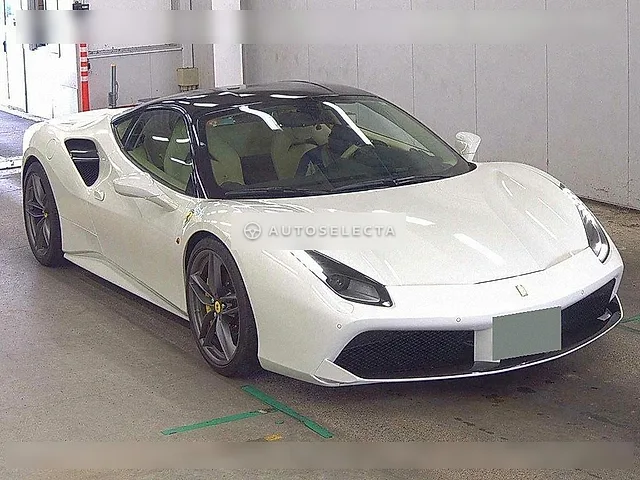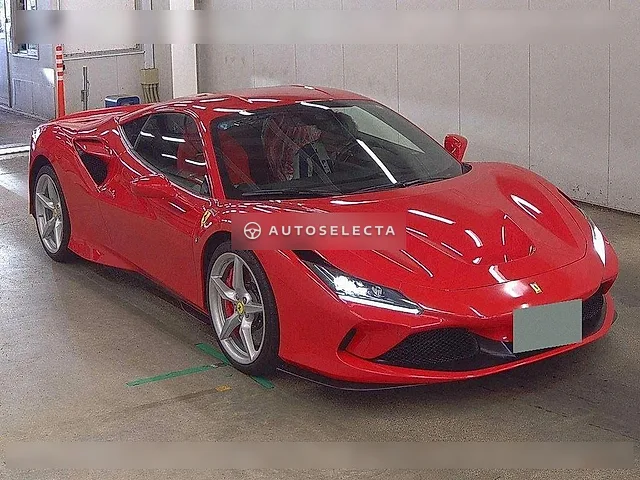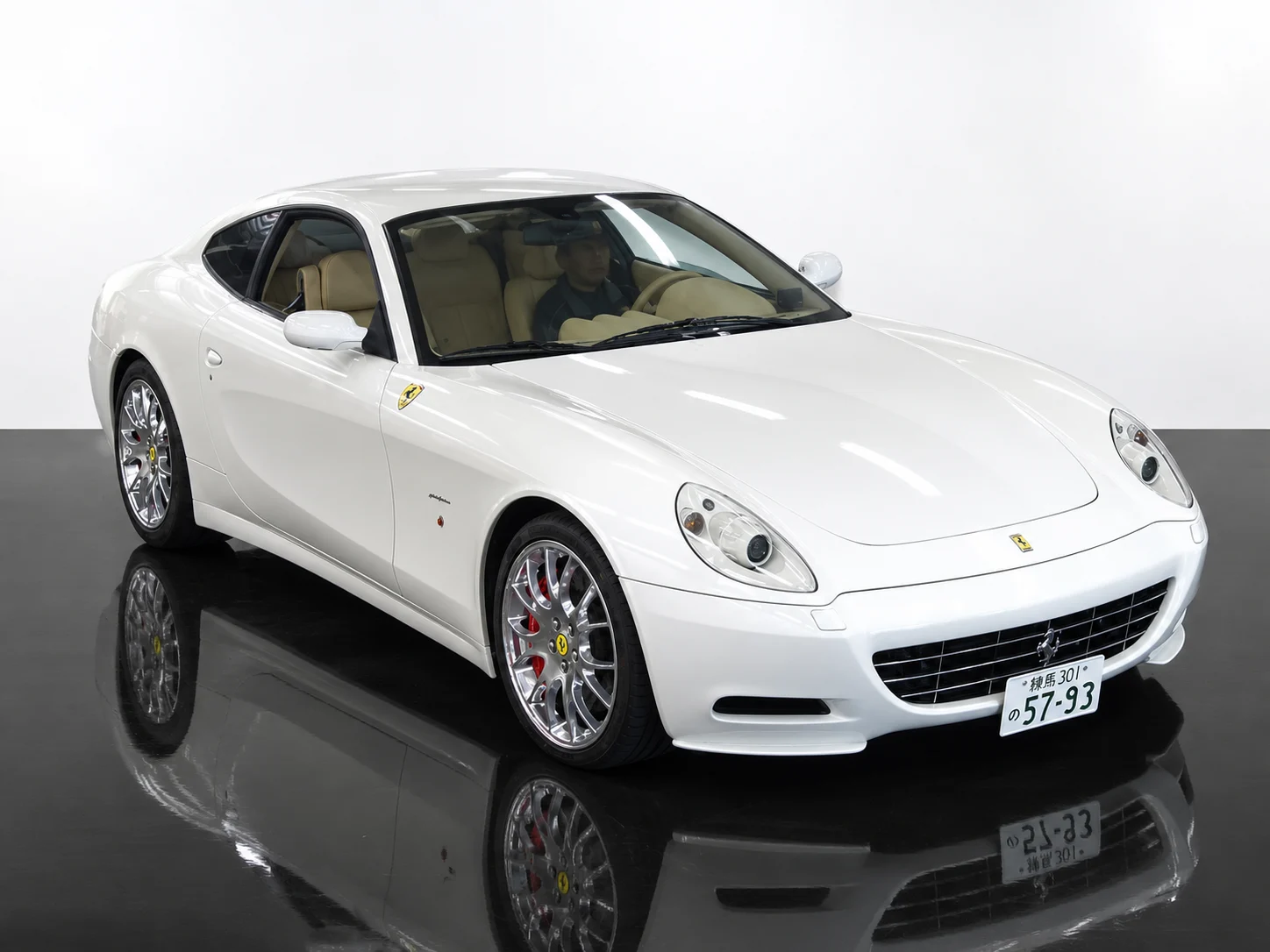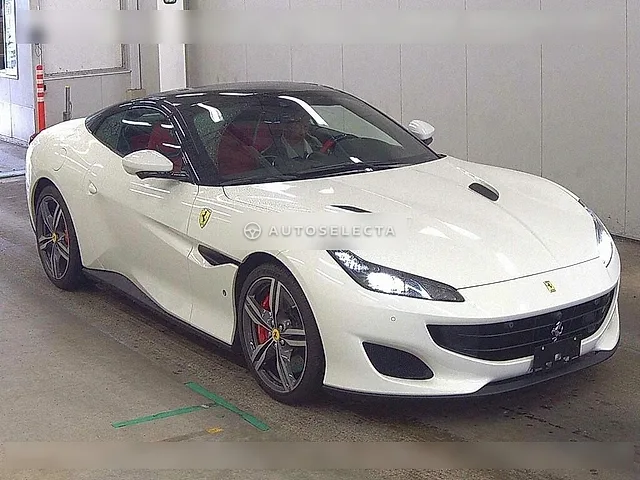




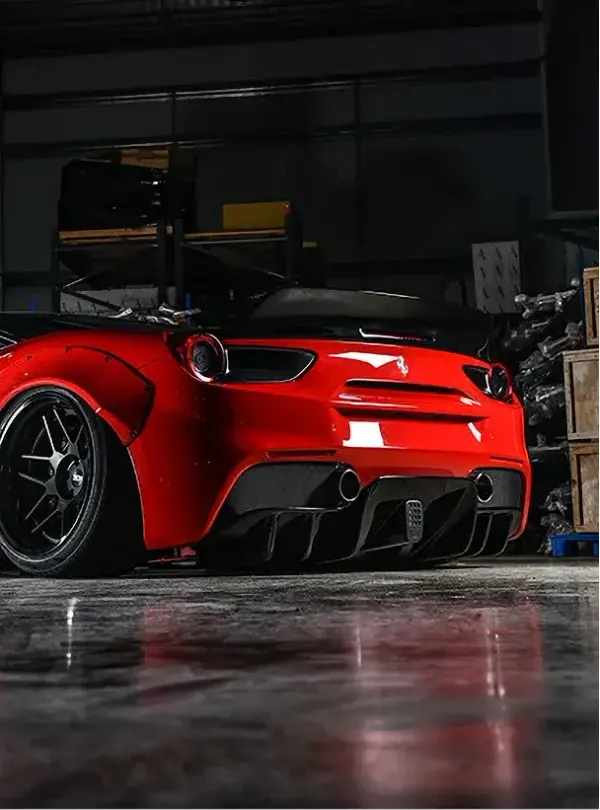



Overview of the Ferrari F8 Spider
This is a September 2022 Ferrari F8 Spider, chassis code F142CE, finished in the marque's signature Rosso Corsa with a red leather cabin. It is a genuine low mileage example, showing just 3,386 km on the odometer at inspection, which converts to approximately 2,104 miles. The car was a dealer imported example in Japan, registered new in Chiba to a single corporate owner, and comes with a new car maintenance booklet present. It carries an auction grade of 5 with an interior grade of A, both at the top end of the Japanese auction scale, and the inspector's own comments are limited to seat creases and small scratches in various places, which is typical of a car with this little use rather than any sign of hard driving or accident history.
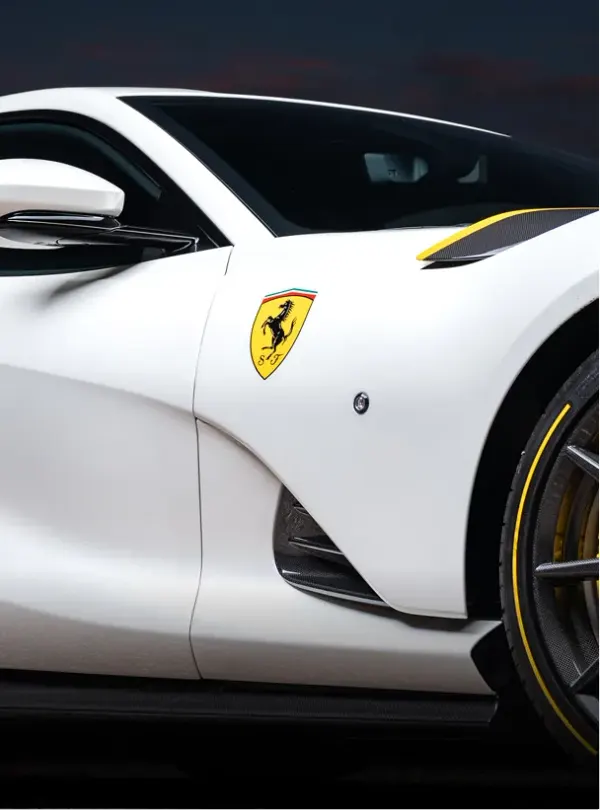
The F8 Spider is the open top version of Ferrari's mid engined V8 flagship that replaced the 488 Spider, and this particular car sits at the very top of the model's specification with front suspension lift, carbon fibre detailing throughout the cabin, forged 20 inch diamond finish wheels and the desirable Scuderia Ferrari shield badges on the front wings. For buyers searching worldwide for a genuinely low mileage Ferrari F8 Spider with a clean auction history, this lot from USS Tokyo is a strong candidate.
The Drive Review
The F8 Spider uses Ferrari's twin turbocharged 3.9 litre V8, badged internally at Maranello as the F154, which won the International Engine of the Year award in successive years and remains one of the most celebrated turbocharged engines built by any manufacturer. In the F8 it is tuned to produce a genuinely savage top end, with the turbos spooling with almost no perceptible lag thanks to Ferrari's clever exhaust manifold and electronic wastegate control, so the car pulls with naturally aspirated urgency all the way to a red line beyond 8,000 rpm despite the forced induction. The soundtrack is deliberately engineered to echo the flat plane crank V8s of Ferrari's past, with a hard metallic edge that builds as the revs rise, and in the Spider that noise is even more present with the roof down thanks to the wind deflector and the reduced glass area behind the cabin.
Behind the wheel the F8 Spider is startlingly composed for a car with this much power. The seven speed dual clutch transmission, shared in its basic architecture with the 488 but recalibrated, snaps through changes almost instantaneously in the higher drive modes, and Ferrari's Side Slip Control software allows the chassis to be pushed hard on track while still offering a genuine safety net for road use. The steering is quick geared and light in the way that only a modern Ferrari's is, which takes some recalibration for drivers used to heavier modern sports cars, but it rewards confidence with startling front end accuracy. The retractable hard top folds away in around fourteen seconds and adds negligible weight or torsional compromise compared with the coupe, meaning the Spider loses little of the F8's poise while adding open air theatre that suits a car with this much engine character.
Weaknesses to be aware of with the model include the complexity and cost of servicing a modern turbocharged Ferrari V8, the reliance on specialist diagnostic equipment for the electronic differential and dynamic systems, and the fact that dual clutch transmissions of this type are expensive to overhaul if neglected, though a car with this genuinely low mileage and single corporate ownership is about as clean a starting point as the model offers.
Auction Details
This Ferrari F8 Spider crossed USS Tokyo, one of Japan's largest and most respected auction houses, carrying lot number 75382. The auction date in Japan is 1 October 2026, and the auction start price is set at ¥33,800,000. Two broadly comparable F8 Spiders have previously sold at Japanese auction between £163,711 and £201,413, though that range covers other specifications and conditions and is not a guarantee of what this car will make. No Autoselecta guide bidding range has been set for this particular lot, so bidders should refer to the price panel on this page for live figures rather than any figure quoted elsewhere. All bids must be submitted before 9PM UK time the evening before auction. For this lot, that means bids must be in before 9PM UK time on Wednesday 30 September.
Vehicle Specifications
Manufacturer Ferrari, model F8 Spider, chassis code 7BA-F142CE, frame number ZFF93LMJ000280927, first registration September 2022 (Reiwa 4), grade base grade, body type open top convertible, engine capacity 3,900 cc twin turbocharged V8, fuel petrol, transmission automatic (seven speed dual clutch), drive layout 2WD, steering left hand drive, seating capacity two, exterior colour red (Rosso Corsa, no colour change noted), interior colour not stated on the auction sheet, odometer reading 3,386 km which is approximately 2,104 miles, Japanese roadworthiness certificate (shaken) valid until 25 September 2027, dimensions 462 cm long, 197 cm wide and 121 cm high, recycling deposit recorded at 13,530 yen, import classification official dealer import.
Factory Features and Equipment
The auction sheet marks this car as fitted with genuine alloy wheels, power steering, power windows, leather upholstery, navigation and airbags as standard equipment codes. Beyond those baseline marks, the sales points section of the sheet lists a strong specification: one corporate owner from new, official dealer supplied car, exterior colour confirmed as Rosso Corsa, a front suspension lifter for negotiating speed bumps and steep driveways, an adaptive front lighting system, a carbon fibre engine cover, a carbon fibre driver zone with integrated LED detailing, a carbon fibre centre bridge, a carbon fibre dash insert, 20 inch forged diamond finish wheels, Apple CarPlay, genuine factory navigation, red painted brake calipers and electrically adjustable seats.
Further points to note on the sheet include heated seats, prancing horse embroidery on the headrests, coloured special stitching to the cabin, a coloured steering wheel rim, a yellow faced rev counter, Scuderia Ferrari shield badging, front and rear parking sensors, a rear parking camera, a dashcam and a radar detector fitted. This is a genuinely well equipped example of the F8 Spider even by the standards of a model that was already comprehensively specified from the factory.
Japanese Auction Report Translation
Working directly from the original Japanese auction sheet, checked and translated by Autoselecta, the sheet is headed as an imported car prime corner listing, confirming this is a foreign manufactured vehicle handled through USS Tokyo's dedicated import car section. The vehicle history box, which would normally flag rental use, previous accident repair or other unusual histories, is left blank, and the sheet separately confirms one corporate owner, both of which point to a straightforward ownership history rather than fleet or rental use.
The inspector's own written comments are limited to two lines: seat creases, and small scratches in various places. Neither comment describes anything mechanical, and there is no mention of engine noise, transmission concerns, clutch operation, fluid leaks, warning lights, air conditioning faults, electrical problems, suspension or steering issues, brake concerns, exhaust problems, rust, corrosion, accident repair or replacement panels anywhere on the sheet. The new car maintenance booklet with warranty is confirmed present and circled on the sheet. The owner's manual, warranty document and spare key are noted as being sent on after the sale, which is a routine administrative note on imported cars passing through Japanese auction rather than any indication of a problem, but buyers should be aware these items will follow rather than arrive with the car itself. No further comments regarding tyres, glass, lights, boot area or spare wheel are made on the sheet.
Damage Diagram and Body Condition
The damage diagram on the auction sheet records four points. A scuff, marked スリA, is noted on the front bumper. A second scuff, also スリA, is noted on the rear bumper. A mark described as stone chips, トビA, is noted at the front centre of the car, in the area of the bonnet close to the windscreen, though the inspector has flagged this specific note as not entirely certain in its exact placement. A single small scratch, A1, is noted with a leader line pointing toward the left side of the roof or cabin area, again flagged by the inspector as not fully certain in its precise location. There is no notation anywhere on the diagram for dents, dimples, cracks, repainted panels, replaced panels or repair waves, and no rust or corrosion marks are recorded.
Taken together with the auction grade of 5, which is the highest widely used grade at Japanese auction and denotes a virtually as new car, this is a body in excellent, usable enthusiast condition rather than a car requiring any cosmetic attention. The only marks recorded are the kind of light front and rear bumper scuffing and stone chipping that would be expected of any car that has covered a few thousand kilometres on real roads, and nothing on the sheet suggests any accident history, repaint work or structural repair.
Interior Condition
The interior grade is recorded as A, which is the top interior grade on the Japanese auction scale and reflects a cabin in excellent, close to showroom condition. The inspector's only interior comment is seat creases, which is a normal and expected observation on a leather sports seat that has been sat in, rather than any note of tearing, staining, wear through or damage. The equipment list confirms red leather trim with coloured special stitching, a coloured steering wheel, prancing horse embroidered headrests, Scuderia Ferrari shields, a yellow faced rev counter, heated seats and electrically adjustable seats, all of which are visible in the supplied photographs of the dashboard and driver's seat. The instrument photograph shows an odometer reading of 3,386 km at the time of photography, matching the sheet, together with the car left in neutral with the digital dash displaying a system information message, which is a routine screen rather than a fault indication.
Japanese Auction Grades
Japanese auction houses grade both the exterior and the interior of every car separately, and USS Tokyo uses a numerical exterior scale that typically runs from 1 up to 6, with 6 reserved for brand new or as new unregistered cars and 5 denoting a car in excellent condition with only very minor faults, exactly as recorded here. The interior grading uses a letter scale, with S and A denoting excellent to near new cabin condition, B denoting light general wear, and grades further down the alphabet denoting increasing wear, damage or odour. A car graded 5 on the exterior and A on the interior, as this F8 Spider is, sits at the very top end of what buyers can expect to find at Japanese auction, and reflects the genuinely low mileage and single owner history recorded on the sheet.
Model History
The Ferrari F8 Spider was introduced in 2019 as the open top companion to the F8 Tributo, itself the successor to the 488 Spider within Ferrari's mid engined V8 supercar line. It carries forward the twin turbocharged 3.9 litre V8 first seen in the 488, further developed to produce more power and a broader, more linear delivery, and pairs it with sharper aerodynamics drawing heavily on lessons learned from the limited edition 488 Pista. The name F8 references the model's eight cylinders and its position as the eighth generation of Ferrari's mid engined V8 berlinetta line stretching back to the 308. Production of the F8 family ran through to 2022, when it was succeeded by the hybrid assisted 296 range, making the F8 Spider one of the last purely petrol powered, non hybrid V8 Ferraris to be built, a point that has already begun to add to the model's long term appeal among enthusiasts who value a direct combustion driving experience over an electrified one.
Why This Model Has Become Collectible
The F8 Spider's position as effectively the final chapter of Ferrari's naturally aspirated feeling, purely combustion mid engined V8 line, before hybrid assistance arrived with the 296, has given the model a growing significance among collectors and enthusiasts that goes beyond simple performance figures. Its F154 series engine has genuine motorsport pedigree, its two time International Engine of the Year award recognises an unusually successful marriage of turbocharging with authentic Ferrari character, and the model's aerodynamic development, borrowing directly from the track focused 488 Pista, gives it engineering substance beyond a simple styling exercise. Open top Ferraris of this type have also historically shown strong global demand, and low mileage, single owner examples with a clean auction history and full factory specification, as this car has, are becoming harder to source from the Japanese market as good cars are increasingly retained or exported quickly. Right hand drive markets in particular are seeing fewer of these cars appear at auction as time passes, adding to the appeal of sourcing a genuinely fresh left hand drive example such as this one directly from Japan.
What To Look For When Buying This Model
Buyers considering any F8 Spider, and this Ferrari F8 Spider in particular, should look closely at service history and confirm any timing and clutch related maintenance intervals have been kept up, given the complexity and cost of major work on the dual clutch transmission and turbocharged V8. Cosmetic wear to the sports seat bolsters, as noted on this car's sheet as light seat creasing, is common and expected rather than a concern. Buyers should check that all convertible roof mechanism functions are demonstrated on inspection where possible, and should be comfortable with the left hand drive configuration of this particular car, which is standard for the Japanese domestic delivered F8 Spider of this type. As with any high performance turbocharged car, checking for even tyre wear, confirming brake disc and pad condition given the red painted calipers fitted, and verifying that all electronic driver aid and infotainment systems function correctly are sensible steps, though nothing on this car's auction sheet points to any current fault in these areas.
Why Import This Car From Japan
Japan remains one of the strongest sources of genuinely low mileage, well documented performance cars anywhere in the world, a result of stringent domestic inspection requirements, a culture of careful ownership and meticulous record keeping through auction house grading. A car like this Ferrari F8 Spider, showing 3,386 km, one corporate owner and a top level grade 5 exterior with A grade interior, is the kind of example that is genuinely difficult to find in equivalent condition through private sale or dealer stock in most other markets, where higher mileage and multiple ownership are far more typical. Buying through the Japanese auction system also gives buyers access to an independent, standardised condition report on every car, produced by trained inspectors working to a consistent national grading framework, offering a level of transparency that is often absent from private sales elsewhere.
Ultimate Guide For Japanese Imports
Importing a car from Japan involves the vehicle being purchased at auction, prepared and de registered for export, shipped by sea to the buyer's destination country, and then cleared through that country's customs and vehicle registration process, with requirements varying significantly by country regarding emissions compliance, registration inspection and any applicable duties or taxes. Buyers should research their own country's specific import requirements for a left hand drive Ferrari of this age before bidding, as rules differ widely between the United Kingdom, the European Union, Australia, New Zealand, the Middle East and elsewhere, and Autoselecta can advise on the general process once a buyer's country is known.
Why Import Through Autoselecta
Autoselecta provides direct access to Japan's major auction houses, including USS Tokyo where this Ferrari F8 Spider is listed, giving buyers worldwide the ability to bid on cars that rarely if ever appear for sale outside Japan. Every auction sheet is translated and explained in full, as with this report, giving buyers genuine transparency on condition before they commit to bidding rather than relying on photographs alone. Autoselecta's team handles vehicle sourcing, bidding strategy and execution, export preparation, international shipping arrangements, and import support once the car arrives in the buyer's own country, with vehicle tracking provided where available throughout the shipping process. The team remains in contact with buyers at every stage from initial enquiry through to delivery, and can advise on the specific requirements of the buyer's own country before any bid is placed.
Browse This Week's Japanese Auctions
Alongside this Ferrari F8 Spider, Autoselecta lists a constantly changing selection of vehicles fresh from Japan's major auction houses each week, spanning modern performance cars, Japanese domestic market icons and everyday imports, all with translated auction sheets and full condition detail provided in the same way as this report.
Live Auction Search
Buyers can search live Japanese auction listings directly through Autoselecta to find comparable Ferrari models or other vehicles of interest, with new lots added as they become available ahead of each week's auctions across Japan's major auction houses.
Auction Caution
This Ferrari F8 Spider, like every vehicle offered through Japanese auction, has been inspected and graded by an independent auction house inspector before sale, but it remains a used vehicle bought at auction rather than a vehicle sold with any form of mechanical warranty. The auction sheet is an independent condition guide based on a visual and functional inspection at the time of listing, not a guarantee of mechanical soundness, and buyers of any high performance car of this kind should budget for routine servicing, fluids and any wear items as a matter of course after purchase. On this specific car, the only points recorded by the inspector are seat creases and small scratches in various places, with light scuffing to the front and rear bumpers and stone chipping and a small scratch noted on the damage diagram, and buyers should treat those notes as the definitive record of this car's condition at inspection alongside the photographs provided.