










Overview of the Toyota Land Cruiser 100
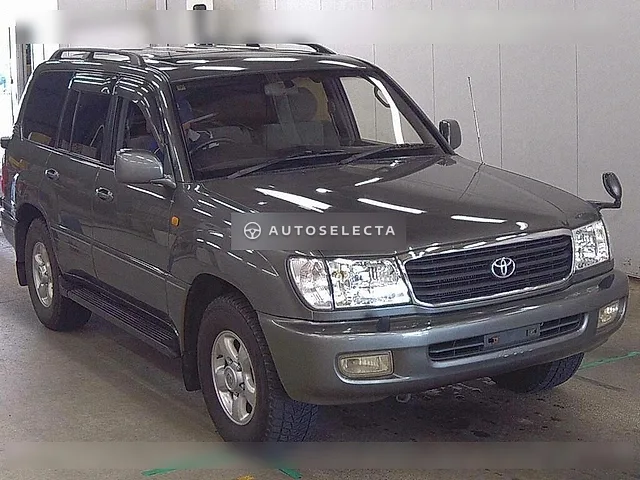
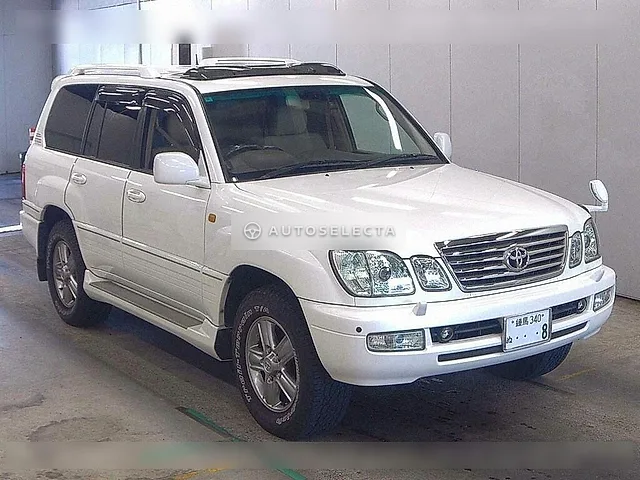
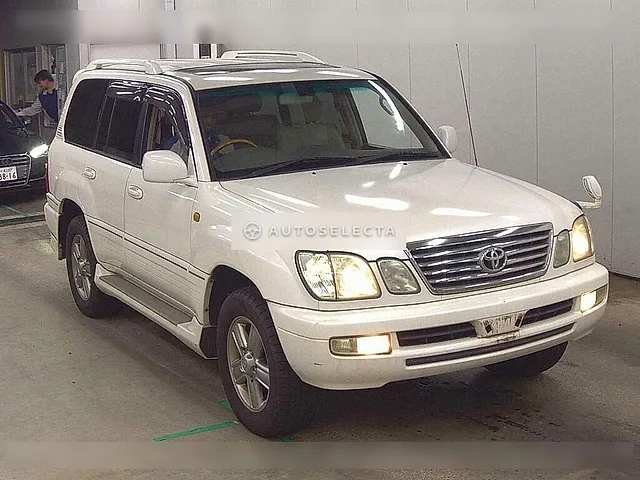
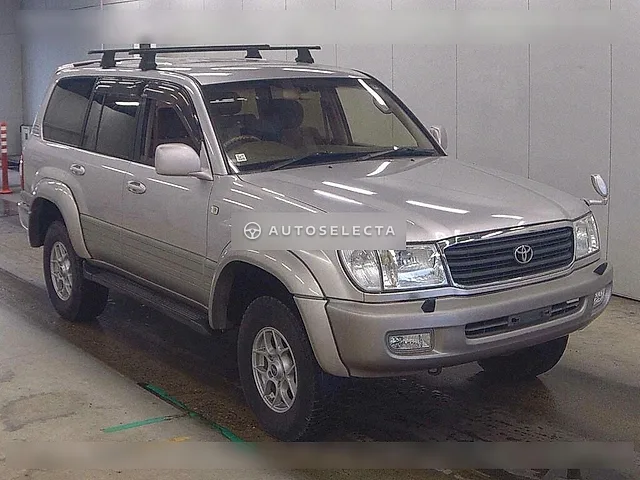
This is a December 1998 registered Toyota Land Cruiser 100, chassis code GF-UZJ100W, fitted with the 4,700cc 2UZ-FE V8 petrol engine driving through a floor mounted automatic gearbox and permanent 4WD. The odometer on the auction sheet reads 102,430 km, which converts to approximately 63,656 miles. The car sits on offer through USS Tokyo, lot number 15116, with an auction date of 1 October 2026. It carries an overall auction grade of 4 with an interior grade of B, and has been finished in blue following a factory colour change noted on the sheet. This particular Land Cruiser 100 has been fitted with a Flex Kit 60 series look conversion, aftermarket narrow specification wheels, leather look seat covers, front and rear chrome bumpers, and an aftermarket navigation and TV unit with reversing camera, giving it a distinctive retro styled look that references the earlier 60 series Land Cruiser while retaining the mechanical substance of the 100 series underneath. For buyers researching the Toyota Land Cruiser 100 as a potential import, this example presents a genuine, honestly graded auction car with a clearly documented condition report rather than a vague private sale description.
The Drive Review
The UZJ100W Land Cruiser 100 represents the point at which Toyota's flagship off roader became a genuinely refined, long distance capable vehicle without giving up the mechanical toughness that built the Land Cruiser name. The 2UZ-FE 4.7 litre V8 is a quad cam, 32 valve unit shared in related form with the Lexus LX470, and it produces smooth, unstressed power delivery rather than outright urgency. Peak output in Japanese market tune is generally quoted around 235PS, and while that number never felt dramatic even when new, the way the engine delivers it is the real story: deep, even torque from low in the rev range, a flat and linear throttle response, and a V8 exhaust note that is understated rather than aggressive. Paired with the four speed automatic gearbox of this generation, the car simply gathers speed without drama, cruising comfortably on motorways while retaining genuinely serious low range four wheel drive capability for rough terrain, sand, snow or mud.
On the road, the 100 series feels every bit as substantial as its dimensions suggest. Steering is light but accurate at parking speeds and settles into a stable, confidence inspiring weight once moving, helped by a chassis that was significantly stiffer than the outgoing 80 series it replaced. Independent front suspension (introduced on the 100 series for the first time on a Land Cruiser) smooths out the ride noticeably compared with earlier live axle Land Cruisers, while the solid rear axle keeps the vehicle predictable when loaded or towing. Body roll is present, as you would expect from a tall, heavy off roader, but it is well controlled and never unsettling. This is not a car that rewards being driven quickly through corners; instead its appeal lies in an unshakeable sense of mechanical solidity, a commanding driving position, and the knowledge that it will keep working long after lighter, more fragile SUVs have given up. Weaknesses to be aware of on any 100 series include head gasket wear on high mileage or poorly maintained 2UZ-FE engines, general wear in the automatic gearbox if fluid changes have been neglected, and the fuel consumption that comes with a naturally aspirated V8 of this size. None of these are unique concerns for this particular car beyond what is noted on the auction sheet, but they are worth budgeting for as routine ownership costs on any example of this model.
Auction Details
This Toyota Land Cruiser 100 is offered through USS Tokyo, lot number 15116, with an auction date of 1 October 2026. The auction start price is ¥1,500,000. Autoselecta's own guide bidding range for this car is £5,000 to £7,250, based on recent results for comparable Land Cruiser 100 examples at Japanese auction, which have ranged between roughly £4,469 and £7,329, typically settling around £4,950. This guide is an estimated bidding range only, not a guaranteed purchase price, and this car may sell above, below or within that range depending on how bidding develops on the day. For the current pricing breakdown, including estimated Japan costs, shipping and import related charges for your country, please refer to the price panel on this page rather than any figures quoted elsewhere. All bids must be submitted before 9PM UK time the evening before auction.
Vehicle Specifications
Manufacturer Toyota, model Land Cruiser 100, chassis code GF-UZJ100W, frame number UZJ100-0002836, first registered December 1998 (Heisei 10). Engine 4,700cc 2UZ-FE V8 petrol, transmission four speed floor mounted automatic (FAT on the sheet), drive layout permanent 4WD. Body style five door station wagon, seating for five, load capacity 0.25 tonnes. Exterior dimensions are given on the sheet as 483cm long, 194cm wide and 190cm tall. Exterior colour blue, noted on the sheet as a colour change (色替) from the factory original, with colour code left blank. Interior colour not specified on the sheet. Odometer reading 102,430 km, approximately 63,656 miles. Fuel type petrol. Auction house USS Tokyo, lot number 15116, overall auction grade 4, interior grade B.
Factory Features and Equipment
The auction sheet marks this Land Cruiser 100 with power steering, power windows and an airbag as standard equipped items. Air conditioning is noted as AAC, automatic climate control. Beyond the factory listed equipment, the seller's sales points confirm a number of aftermarket additions fitted to this specific car: a Flex Kit 60 series look conversion, aftermarket narrow specification wheels, leather look seat covers, front and rear chrome bumpers, and an aftermarket navigation and TV unit with a reversing camera. The photographs show a wood effect steering wheel and matching wood trim on the dashboard and centre console, along with dark leather look upholstery. New car service book status and import documentation fields are both left blank on the sheet, so these are not confirmed.
Japanese Auction Report Translation
Translated and checked by Autoselecta, the inspector's handwritten notes on this Land Cruiser 100 read as follows. The car is described as a colour changed vehicle (色替車) with waviness noted in the paint or panels, consistent with a respray. The cabin is noted as partly dirty or stained in places (ルーム内一部汚れ). The inspector has written a query against the steering wheel, asking whether it is an aftermarket item (外品ハンドル?), and this is marked with a question mark rather than stated as fact, so it should be treated as unconfirmed. The underside of the vehicle is noted as rust proofed (下廻り防錆). The door mirror is noted as scratched (ドアミラーキズ). The general condition line notes small scratches and small dents present, along with aftermarket parts fitted (小キズ小凹、外品有), which aligns with the styling kit, bumpers and wheels listed under the sales points. No service book, maintenance history or spare key information is mentioned anywhere on the sheet, so none of these can be confirmed as present.
Damage Diagram and Body Condition
The damage diagram on the auction sheet marks several areas of note. Both the front left and front right wings are marked XX, indicating replaced panels. The bonnet is also marked XX, again indicating a replaced panel. The rear tailgate (back door) is marked XX as well, indicating a replaced panel there too. It is worth noting that these XX markings could relate to genuine panel replacement from prior repair work, or they may be connected to fitment of the front and rear chrome bumpers and the Flex 60 look conversion kit, but the sheet itself simply records XX without further explanation, so the exact cause is not confirmed. The windscreen is marked トビA, indicating stone chips. The roof carries a U1 marking, indicating a small dent. The rear bumper carries an A1 marking, indicating a small scratch. There is a further notation near the rear of the diagram that appears to read 欠 alongside スペア, which is understood to indicate that the spare tyre is missing, though this is not stated with complete certainty on the sheet and buyers should treat it as an item to verify. Taken together, this is a Land Cruiser 100 that has clearly lived a working life and has been dressed with a styling kit, rather than a concours condition original example. It sits fairly and squarely as a usable, enthusiast grade 4 example rather than a collector grade or restoration project, with cosmetic issues that are typical for a 27 year old vehicle of this mileage and history.
Interior Condition
The interior is graded B on the auction sheet, indicating a generally presentable cabin with some wear consistent with age and mileage rather than a pristine, like new interior. The inspector's note of partial dirt or staining in the cabin (ルーム内一部汚れ) should be read alongside this grade. Photographs show dark leather look seat covers fitted over the original upholstery, a wood effect steering wheel and matching wood trim inserts across the dashboard and centre console, and an aftermarket touchscreen navigation unit in place of the original head unit. The automatic gearbox selector and surrounding trim appear factory in style but photographed alongside the aftermarket navigation system. No mention is made on the sheet of headlining condition, dashboard cracking, or odours, so nothing beyond what is stated here can be confirmed.
Japanese Auction Grades
Japanese auction grades are a shorthand condition system used across all major auction houses including USS Tokyo, and they are the most reliable independent guide available before a car ships from Japan. The overall grade of 4 given to this Land Cruiser 100 places it in the solid, usable mid range bracket, below the cleaner grades of 4.5 and 5 which are reserved for cars with minimal wear and no significant panel repair, but well above grade 3 or below, which would indicate a car with more significant accident history or heavier general wear. Interior grades run on a separate letter scale from A (like new) down through B, C and D; the B awarded here indicates an interior with light general wear, consistent with the inspector's note of partial cabin dirt, but not the more significant wear or damage that would be marked C or D. These grades are assigned by trained, independent auction house inspectors and give buyers outside Japan genuine transparency on a car's condition before bidding, something rarely available when buying a used 4x4 through normal classified channels.
Model History
The Land Cruiser 100 series was introduced by Toyota in 1998 as the replacement for the long running 80 series, and it marked a significant step change for the model line. For the first time, a Land Cruiser adopted independent front suspension in place of a solid front axle, a change aimed squarely at improving on road ride comfort and handling without compromising the vehicle's genuine off road ability, which remained backed by low range gearing and a full time four wheel drive system with a locking centre differential. The 100 series was offered in Japan and other markets with both the 4.7 litre 2UZ-FE V8 petrol engine, as fitted to this car, and various diesel options depending on market. The related Lexus LX470 shared much of its mechanical package and was aimed at a more luxury focused audience internationally, while the Toyota badged Land Cruiser 100 continued to serve as the flagship of Toyota's genuinely capable off road range, sold new in Japan, the Middle East, Australia, Africa and beyond. Production ran through to 2007 when the model was succeeded by the 200 series. Across its production run, the 100 series built a reputation as one of the most dependable large four wheel drive vehicles ever sold, used by governments, aid organisations, expedition teams and private buyers who valued its combination of comfort and genuine durability over more fashion led SUV rivals of the era.
Why This Model Has Become Collectible
The Toyota Land Cruiser 100 has steadily built a following among enthusiasts and overlanding buyers worldwide, and interest has only grown as good, honest examples become harder to find in Japan itself. Part of the appeal is straightforward: the 2UZ-FE V8 has a strong reputation for longevity when maintained, the drivetrain is mechanically simple by modern standards with no complex turbocharging or hybrid systems to fail, and the body on frame construction means the vehicle can absorb genuine hard use without the structural concerns that afflict unibody SUVs after heavy off road work. As Toyota's global reputation for reliability has grown, so has demand for older Land Cruisers as usable classics rather than simply as tools, and clean, well specified examples from the Japanese domestic market are increasingly sought after in North America, Europe, Australia and across Africa and the Middle East. In the United States specifically, the 25 year import rule means Land Cruiser 100 models built from 1998 onward have begun to reach eligibility, opening up a fresh wave of demand from American buyers who could not officially import these vehicles new but can now bring in genuine Japanese market examples, complete with right hand drive if applicable, factory equipment and specification not always offered in their home market. Rarity is relative here; the 100 series was not a low volume vehicle, but well kept, accident free examples with clear auction history are becoming genuinely harder to source as the best cars are gradually used up or exported, which continues to support ongoing demand for cars coming fresh out of the Japanese auction system.
What To Look For When Buying This Model
Buyers considering any Toyota Land Cruiser 100, including this example, should pay attention to head gasket condition on the 2UZ-FE V8, particularly on cars with patchy service history, since head gasket failure is a known concern on this engine when cooling systems have not been properly maintained. The automatic gearbox should shift cleanly through all ratios with no hesitation or flare, and fluid that has never been changed can shorten the life of the unit considerably. Rust should be checked around the chassis rails, suspension mounting points and rear wheel arches, particularly on cars that have seen genuine off road use or coastal climates, and this is worth checking closely given that this car's underside is noted on the sheet as having been rust proofed, which is a positive sign but does not guarantee an entirely rust free chassis underneath. On this specific car, buyers should also be mindful of the panels marked XX on the damage diagram (both front wings, bonnet and rear tailgate), the noted paint waviness from the colour change respray, the query mark against the steering wheel's originality, and the possible missing spare tyre, and should factor in a proper physical inspection or full set of high resolution photographs before committing to a final bid if any of these points are of particular concern.
Why Import This Car From Japan
Japan remains one of the strongest global sources for genuinely well kept, low rust Land Cruiser 100 models, largely thanks to a domestic culture of regular maintenance, garage storage where possible, and a used car market where vehicles are frequently traded in well before they accumulate the kind of extreme mileage or neglect seen in some other markets. The independent auction grading system used by houses like USS Tokyo gives overseas buyers a level of transparency that is very difficult to replicate when buying privately or through a general used car dealer, since every car is inspected and graded by a trained third party rather than described solely by the seller. For a robust, mechanically simple vehicle like the Land Cruiser 100, sourcing directly from Japan also frequently means access to better specified, well optioned examples, including cars like this one with factory air conditioning, power steering and airbags fitted as standard, alongside whatever period correct or aftermarket modifications a previous Japanese owner has chosen to add.
USA Import Information
This 1998 built Toyota Land Cruiser 100 is now over 25 years old and is therefore eligible for import into the United States under the federal 25 year import rule. Autoselecta can arrange shipment of this vehicle from Japan to the United States. Buyers in the USA are encouraged to contact Autoselecta with their city or ZIP code before placing a bid, so that a full delivered quotation can be prepared in advance. Autoselecta can calculate the expected purchase cost, Japan side charges, ocean freight, customs related costs and any state specific delivery requirements that may apply once the vehicle arrives, so that there are no surprises during the import process.
Ultimate Guide For Japanese Imports
Importing a vehicle from a Japanese auction generally involves several clear stages: securing a bid through a trusted agent, paying the winning bid plus Japan side fees once the auction concludes, arranging export preparation and shipping to the buyer's destination port, and then handling customs clearance and any local registration or compliance requirements once the vehicle arrives in the buyer's own country. Requirements vary significantly by destination, with the United States applying its 25 year rule, Canada applying a 15 year rule, and other countries such as those in Europe, Australia and across Africa and the Middle East each having their own specific import age limits, emissions requirements and registration procedures. Because of this variation, it is worth confirming your own country's specific import rules for a vehicle of this age and specification before bidding, rather than assuming rules from one country apply elsewhere.
Why Import Through Autoselecta
Autoselecta provides direct access to the Japanese auction system, including houses such as USS Tokyo where this Land Cruiser 100 is listed, giving buyers a genuine window into the same auction sheets, grading and inspection reports used by dealers inside Japan. Every auction sheet is translated and checked by Autoselecta staff rather than relying on machine translation alone, ensuring inspector comments, damage diagrams and grading are properly understood before a bid is placed. Autoselecta assists with vehicle sourcing across the full range of Japanese auction houses, provides bidding assistance and guidance on realistic bidding ranges, and handles the full export process once a vehicle is won, including shipping arrangements, import support and vehicle tracking where available, along with arrival and import assistance in the buyer's own country, wherever in the world that may be. Communication continues throughout the process, from the initial auction sheet review through to final delivery.
Browse This Week's Japanese Auctions
Alongside this Toyota Land Cruiser 100, Autoselecta lists a wide range of vehicles currently available through Japanese auctions each week, spanning classic and modern Toyota, Nissan, Honda, Mazda, Subaru and other manufacturers. Buyers researching this model are welcome to browse the current week's listings for comparable Land Cruiser 100 examples or other four wheel drive vehicles at various grades and price points.
Live Auction Search
Autoselecta's live auction search tool allows buyers to search directly across current Japanese auction listings by model, chassis code, grade, mileage and auction house, making it possible to compare this Land Cruiser 100 against other examples currently coming up for sale before placing a bid.
Auction Caution
All auction vehicles, including this Toyota Land Cruiser 100, are inspected before auction, but they remain used vehicles sold through an auction system rather than with a dealer warranty. The auction sheet and grading system provide an independent condition guide prepared by trained inspectors, but this is not a mechanical warranty, and it does not guarantee that every fault has been identified. Older performance and off road vehicles of this age may require servicing, maintenance or refurbishment after purchase, even when purchased in good overall condition. On this specific car, buyers should keep in mind the inspector's noted paint waviness from the colour change respray, the partly dirty cabin, the scratched door mirror, the unconfirmed query over the steering wheel's originality, the panels marked as replaced on the damage diagram, and the possible missing spare tyre, all of which are detailed above and should be weighed carefully before bidding.