











Overview of the Toyota Land Cruiser 80 VX Limited
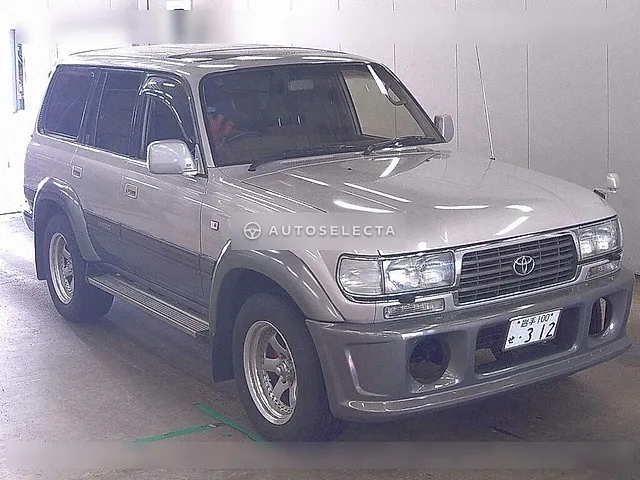
This is a 1990 Toyota Land Cruiser 80 VX Limited, chassis code S-HDJ81V, finished in grey and powered by the 4,200 cc 1HD-T diesel turbo engine driving through a floor mounted automatic transmission and full time 4WD. First registered in October 1990 (Heisei 2), the odometer on the auction sheet reads 137,700 km, which converts to approximately 85,564 miles. The car sits at USS Tokyo as lot 29183, carrying an overall auction grade of 3 with an interior grade of C, and it is due to cross the block on 1 October 2026.
The Land Cruiser 80 series marked a turning point for Toyota's flagship off roader, moving from the utilitarian 60 series towards a more rounded, comfortable family cruiser without giving up the toughness the nameplate is built on. This particular example is a VX Limited, the well equipped grade of the range, fitted from factory with a sunroof, power steering and power windows, plus automatic air conditioning as noted on the auction sheet. The seller acquired the car directly from a private owner (a "user trade in" as noted on the sheet), and both a spare key and the owner's manual are confirmed present. Aftermarket parts are also declared, which buyers should read about in the auction translation section below.
For collectors and overlanders around the world, and particularly in the United States where the 80 series Land Cruiser has built a devoted following, a genuine Japanese market HDJ81V with the 1HD-T diesel represents an increasingly hard to find specification. This report works through every line of the Japanese auction sheet, the visible photographs, and what this means for a buyer considering a Toyota Land Cruiser 80 VX Limited import from Japan.
The Drive Review
The HDJ81V Land Cruiser 80 is a genuinely different driving experience to any modern SUV, and that is precisely its appeal. The 1HD-T is a 4.2 litre straight six diesel with a turbocharger, an engine built for load carrying and longevity rather than outright speed. Power delivery is unhurried, with a deep, mechanical diesel clatter at idle that softens once underway, and a broad spread of torque low in the rev range that makes it feel unstoppable on loose surfaces, steep inclines or when towing. This is not a car that rewards revving hard; it rewards momentum and mechanical sympathy.
The four speed automatic gearbox found in the VX Limited trim suits the character of the engine well, shifting early and smoothly rather than chasing performance, and it pairs with a proper low range transfer case for genuine off road capability. Steering is power assisted but slow and heavy by modern standards, with a large wheel and a driving position that sits you upright and commanding, more truck like than car like. Body control is soft, with a live axle front and rear on coil springs, giving a compliant ride on rough ground at the expense of body roll through corners taken at any real speed.
Weight is considerable for the era, and this is felt under braking and in the way the chassis settles when loaded, but that same mass combined with a boxed ladder frame chassis is exactly why these trucks survive decades of hard use. Enthusiasts who seek out the 80 series do so for its unbreakable reputation, its analogue controls with none of the electronic driver aids of a modern 4x4, and the sense that everything on board, from the door handles to the transfer case lever, is built to be used hard and repaired rather than replaced. Known weak points on high mileage examples include worn interior trim, cracked dashboards from UV exposure (as is noted on this very car), and the usual checks around head gaskets and cooling systems that any turbo diesel of this age warrants, alongside verifying the condition of the differential locks and 4WD system function.
Auction Details
This Toyota Land Cruiser 80 VX Limited is being offered through USS Tokyo, one of Japan's largest and most established auction houses. The lot number is 29183, and the auction date in Japan is 1 October 2026. The auction start price is set at ¥80,000. The Autoselecta guide bidding range for this vehicle is £5,000 to £9,250, and similar Land Cruiser 80 examples across recent Japanese auctions, covering a range of trims and conditions, have sold between £4,469 and £15,523, with a typical result around £8,122.
Please note that the guide range is an estimated bidding range based on comparable sales and is not a guaranteed purchase price; the final hammer price depends on live bidding on the day. Autoselecta does not state the minimum bid or landed cost here, as these figures are calculated live and shown in the price panel on this page, which updates after publication. All bids must be submitted before 9PM UK time the evening before auction.
Vehicle Specifications
Manufacturer: Toyota. Model: Land Cruiser 80, VX Limited grade. Chassis code: S-HDJ81V, frame number HDJ810005053. Year and registration: first registered October 1990 (Heisei 2). Engine: 4,200 cc 1HD-T turbo diesel straight six, fuel type diesel as confirmed on the auction sheet. Transmission: floor mounted automatic (FAT). Drive type: full time 4WD. Body style: 5 door wagon. Exterior colour: grey, listed as original colour with no colour code recorded on the sheet. Interior colour: not confirmed on the auction sheet. Seating capacity: 5. Dimensions: length 503 cm, width 190 cm, height 220 cm. Mileage: 137,700 km, approximately 85,564 miles. Auction house: USS Tokyo. Lot number: 29183. Auction grade: 3. Interior grade: C.
Factory Features and Equipment
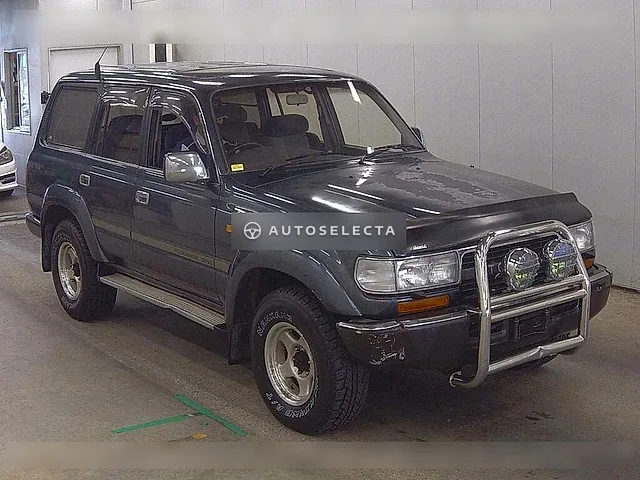
The auction sheet confirms this VX Limited is equipped with a sunroof (SR), power steering (PS) and power windows (PW). Automatic air conditioning (AAC) is also fitted. A spare key and the original owner's manual are both confirmed present according to the sales points section of the sheet. The new car service book field on the sheet is left blank, so a full service book is not confirmed. Steering position is not stated on the sheet, though the photographs show a left hand drive style dashboard layout consistent with Japanese domestic market vehicles of this type, and the instrument cluster is marked DIESEL confirming the fuel type. The photographs also show a rear ladder mounted on the tailgate glass and a front mounted winch bar with what appears to be an aftermarket winch unit, both of which relate to the aftermarket parts noted on the sheet.
Japanese Auction Report Translation
This section is translated and checked by Autoselecta from the original Japanese auction sheet. The lot is recorded as number 29183 with an overall auction grade of 3 and an interior sub grade of C. Engine capacity is listed as 4200 cc against chassis code S-HDJ81V. First registration is recorded as Heisei 2, October, which is October 1990. The model is written as Toyota Land Cruiser 80, body shape 5 door, grade VX Limited, drive 4WD. The vehicle inspection expiry field is left blank. Odometer is recorded at 137,700 km. Transmission is floor automatic (FAT). Air conditioning is automatic air conditioning (AAC).
Exterior colour is recorded as grey in the original colour field, with the colour change box carrying an arrow mark; this most likely indicates no colour change has taken place, though this is not explicitly stated and should not be assumed with certainty. The colour code field is blank. Fuel is recorded as diesel (軽油). The interior colour field is blank. The new car service book field is blank, so this is not confirmed present. The steering position field is blank. A recycling deposit of 8,350 yen is recorded, which is standard Japanese practice and not a condition indicator. Seating capacity is 5. The frame number is HDJ810005053, and overall dimensions are recorded as 503 cm long, 190 cm wide and 220 cm high.
Under sales points, the sheet notes this is a car bought directly from a private owner (a user trade in vehicle), that a spare key is present, and that the owner's manual is present. Under points to note, the sheet flags that aftermarket parts are fitted; the specific parts are not itemised on the sheet itself but the front winch bar and rear ladder visible in the photographs are consistent with this note.
The inspector's own report comments are as follows, translated in full: the seats show wear (シートヘタリ); the cabin is dirty and scuffed (ルーム内汚れスレ); the steering wheel has peeling (ハンドルハゲ); the dashboard is cracked (ダッシュ板ワレ); the body paint is faded and peeling in places (ボディPアセPハゲ); and there are scratches and dents in places along with light scratches (各キズ凹うすキズ). These comments should be read alongside the damage diagram below, which locates specific marks around the body.
Damage Diagram and Body Condition
Working around the diagram as marked on the sheet, the front bumper carries an A2 mark, indicating a scratch of moderate size. The left front wing shows an A2 alongside a note of paint peeling (Pハゲ), meaning a scratch combined with peeling paint in that panel. The right front wing mirrors this with the same combination, paint peeling and an A2 scratch. The bonnet is marked with paint peeling (Pハゲ) without an accompanying scratch code. The roof is likewise marked with paint peeling, consistent with a vehicle that has spent time outdoors and shows UV related fading, matching the inspector's separate comment about faded and peeling body paint.
On the right hand side, around the middle of the car, there is an A1 mark denoting a small scratch, though its exact position, whether on the rear door or at the edge of the roof, is not entirely clear from the diagram and should be treated as unconfirmed. The right rear quarter panel carries a U2 mark, a dent of moderate size, and a further U2 dent is marked at the rear, in the area of the back door. The rear bumper carries a combined mark that reads as A (scratch), U2 (dent) and Y1 (small crack), though the precise combination and severity is not stated with full certainty and is noted here as read from the diagram rather than confirmed. Each of the four tyres carries a figure 7 marked on the diagram, which most likely relates to tread depth or general tyre condition, though the sheet does not explain this figure directly.
Taken together, this is a genuinely used, working Land Cruiser rather than a cosmetically pristine example. The grade 3 rating, combined with multiple paint fade and peeling notes across the bonnet, roof and both front wings, several dents to the rear quarter and tailgate area, and scratches to the bumpers, points to a truck that has done exactly the job these vehicles are built for. The photographs support this reading, showing visible paint fade and dulling across the roof and bonnet under the workshop lighting, along with a well used front bumper and winch mount. This is best described as usable, honest enthusiast condition rather than a collector grade survivor, and a buyer should budget for cosmetic attention if a smarter finish is wanted.
Interior Condition
The interior sub grade is recorded as C, and the inspector's comments are direct: the seats are worn, the cabin is dirty and shows scuffing, the steering wheel has peeling of its trim or coating, and the dashboard has a crack. Interior colour is not stated on the sheet. The photograph of the dashboard and centre console shows a grey plastic dash with a factory tape deck style radio unit, an automatic gear selector, and door trim with a grab handle, all consistent with an original, unrestored Japanese market interior of this age. Seat covers are not visible in the supplied interior photograph, and general wear such as heta (seat sag) mentioned by the inspector should be expected on a vehicle with this mileage and history. The instrument cluster photograph confirms the odometer reading in kilometres, a rev counter marked with TURBO, and a diesel fuel warning sticker, all consistent with the mechanical specification on the auction sheet.
Japanese Auction Grades
Japanese auction houses use a standardised grading scale that buyers overseas should understand before bidding. An overall grade of 3, as given here, indicates a vehicle with visible wear and cosmetic imperfection consistent with genuine age and use, sitting below the cleaner 4 and 4.5 grades and well below the near new 5 and 6 grades reserved for exceptional examples. Grade 3 cars are common among working vehicles like the Land Cruiser and are generally mechanically sound but will show meaningful wear inside and out. The interior grade, given separately here as C, refers specifically to the condition of the cabin: trim, seats, dashboard and general cleanliness, on a scale that typically runs from A (excellent) down through B, C and D. A C grade interior indicates noticeable wear and untidiness, which matches the inspector's specific comments about worn seats, a scuffed cabin, a peeling steering wheel and a cracked dashboard on this vehicle. These grades are assigned independently by the auction house inspector and are a widely trusted, if concise, condition summary rather than a full mechanical inspection.
Model History
The Land Cruiser 80 series, internally coded J80, was introduced by Toyota in 1990 as the successor to the boxier 60 series. It represented a significant step forward in comfort, refinement and on road manners while retaining the full time four wheel drive system, low range transfer case and separate ladder frame chassis that have defined every generation of Land Cruiser. Early 80 series models like this 1990 example used a part time 4WD system with front and rear locking differentials, later revised to full time 4WD partway through the model's production run.
In the Japanese domestic market, the 80 series was offered with a range of engines including the 1HZ naturally aspirated diesel, the 1HD-T turbo diesel fitted to this VX Limited, and later the 1HD-FT, alongside petrol options in certain markets. The VX Limited grade sat towards the top of the range, bringing additional equipment such as the sunroof, power windows and automatic air conditioning found on this example. Production of the 80 series ran through to 1997, when it was succeeded by the 100 series, and today the 80 is widely regarded by enthusiasts as one of the last Land Cruisers built with a genuinely old school, mechanical off road character before electronics and greater refinement took over in later generations.
Why This Model Has Become Collectible
The Land Cruiser 80 has developed a strong following well beyond Japan, particularly in the United States, Australia and across overlanding and expedition communities worldwide. Its reputation for durability, with examples regularly covering several hundred thousand kilometres with basic maintenance, has made it a benchmark for long term reliability among four wheel drive enthusiasts. The 1HD-T turbo diesel engine in particular is respected for its simplicity and strength, a genuine workhorse unit without the complexity of later common rail diesels, which appeals to owners who want to maintain the vehicle themselves.
Global demand has been driven further by the fact that clean, unmodified, right hand drive Japanese market 80 series Land Cruisers are becoming harder to source as good examples are used up or exported. In the United States specifically, the 80 series has become highly sought after now that examples from the early 1990s have passed the 25 year import threshold, opening the door to federal legal importation of turbo diesel models that were never officially sold new in the American market. This has created strong demand for genuine Japanese auction cars with verifiable history, auction grading and documented mileage, exactly the kind of transparency an auction sheet like this one provides. As with any used vehicle of this age, Autoselecta does not present this car as an investment and cannot guarantee future values, but the underlying collector interest in the 80 series Land Cruiser, and in the VX Limited specification in particular, remains well established.
What To Look For When Buying This Model
Buyers considering a Toyota Land Cruiser 80 VX Limited should pay close attention to several areas specific to this generation. The 1HD-T turbo diesel is generally strong, but a full service history and evidence of regular oil and coolant changes are valuable reassurance on any high mileage example, and this particular car's new car service book field is blank on the auction sheet, meaning a complete service book is not confirmed. Cracked or sun damaged dashboards, as noted on this car, are a common and well known issue on 80 series interiors due to the plastic used, and while not a mechanical concern, buyers should factor in the cost of trim replacement or repair if originality matters to them. Paint fade and peeling on the roof and bonnet, as flagged here, is typical of vehicles that have spent time outdoors in Japan's climate and is a cosmetic rather than structural issue in most cases, though it is worth inspecting closely for any bubbling that could indicate underlying corrosion.
Given the aftermarket parts noted on the sheet, including the winch bar and rear ladder visible in the photographs, buyers should ask Autoselecta for any further detail available and budget for inspecting these additions on arrival, since aftermarket fitments are not covered by the factory specification and their condition and quality can vary. As with any 4WD system of this age, verifying that the differential locks, transfer case and 4WD engagement all function correctly is recommended once the vehicle is in the buyer's possession, since this cannot be confirmed from a static auction sheet or photographs alone.
Why Import This Car From Japan
Japan remains one of the best sources in the world for a Toyota Land Cruiser 80 VX Limited such as this one, for several practical reasons. Japanese domestic market cars of this era were typically driven on excellent road surfaces, benefit from Japan's rigorous shaken inspection regime during their working life, and come with an independent, standardised auction grading system that gives buyers a transparent, third party condition assessment before they ever see the car in person. Unlike buying privately, a Japanese auction sale gives access to a documented grade, an inspector's written report, and a full damage diagram, exactly as translated in this report, which is simply not available with most used vehicle sales in other markets.
For the 80 series Land Cruiser specifically, sourcing directly from Japan also gives access to genuine right hand drive, factory specification examples with the diesel engines never officially sold new in markets such as the United States, making Japan the natural source for enthusiasts seeking an authentic, unmodified example of this specification.
USA Import Information
This 1990 Toyota Land Cruiser 80 is now over 25 years old and is eligible for import into the United States under federal law. Autoselecta can arrange shipment of this vehicle from Japan to the United States. Buyers based in the USA are encouraged to contact Autoselecta with their city or ZIP code before bidding so that a delivered quotation can be prepared in advance. Autoselecta can calculate the expected purchase price, Japan side costs, ocean shipping, customs related costs and any specific delivery requirements for the buyer's state, helping avoid surprises after the auction closes.
Ultimate Guide For Japanese Imports
Importing a vehicle from a Japanese auction such as this Toyota Land Cruiser 80 VX Limited follows a clear process. Once a bid is placed and successful, Autoselecta handles payment to the auction house, collection of the vehicle, any export preparation required, and shipping arrangements to the buyer's country. Import rules vary significantly around the world: buyers in the United States benefit from the 25 year rule that makes vehicles like this one eligible for import once they reach that age, while buyers in Canada should note their own 15 year import threshold, and other countries, including within the UK, Europe, Australia and beyond, each apply their own age, emissions and compliance requirements. Autoselecta works with buyers in each destination to confirm the specific requirements that apply before bidding, so there are no surprises once the vehicle has been won at auction.
Why Import Through Autoselecta
Autoselecta provides direct access to Japan's major auction houses, including USS Tokyo where this Land Cruiser 80 is listed, giving buyers worldwide the ability to bid on vehicles that are rarely available through conventional dealer channels. Every auction sheet is translated and explained in full, as with this report, so buyers can make an informed decision based on the inspector's actual findings rather than a generic listing description. Autoselecta assists with bidding strategy, handles all communication with the auction house, manages export documentation, arranges international shipping, and supports buyers through import and customs clearance in their own country, including vehicle tracking where available. Throughout the process, Autoselecta remains a single point of contact from the moment a car is shortlisted through to its arrival with the buyer.
Browse This Week's Japanese Auctions
Autoselecta lists a wide selection of Japanese auction vehicles each week across USS Tokyo and other major auction houses nationwide, from classic performance cars to working 4x4s such as this Toyota Land Cruiser 80. Buyers are welcome to browse current listings on the Autoselecta website to compare condition, grade and pricing across similar vehicles before committing to a bid.
Live Auction Search
Autoselecta also offers a live auction search tool, allowing buyers to search directly for specific models, chassis codes or grades across upcoming Japanese auctions, making it straightforward to track down a particular specification such as this VX Limited grade Land Cruiser 80 or to compare it against other examples currently coming to sale.
Auction Caution
All vehicles offered through Japanese auction houses, including this Toyota Land Cruiser 80, are inspected by the auction house before sale, but they remain used vehicles sold in as inspected condition. The auction sheet, translated in full above, is an independent condition guide compiled by the auction house inspector and is not a mechanical warranty. Older performance and utility vehicles of this age, including turbo diesel 4WD models like this one, should be expected to need servicing, maintenance or refurbishment after purchase, even where the auction grade is favourable. On this particular vehicle, buyers should note again the inspector's specific warnings of worn seats, a dirty and scuffed cabin, a peeling steering wheel, a cracked dashboard, faded and peeling body paint, and scratches and dents in several places as recorded on the auction sheet, along with the declared fitment of aftermarket parts.