Guide
Honda NSX: The Japanese Supercar That Changed Everything
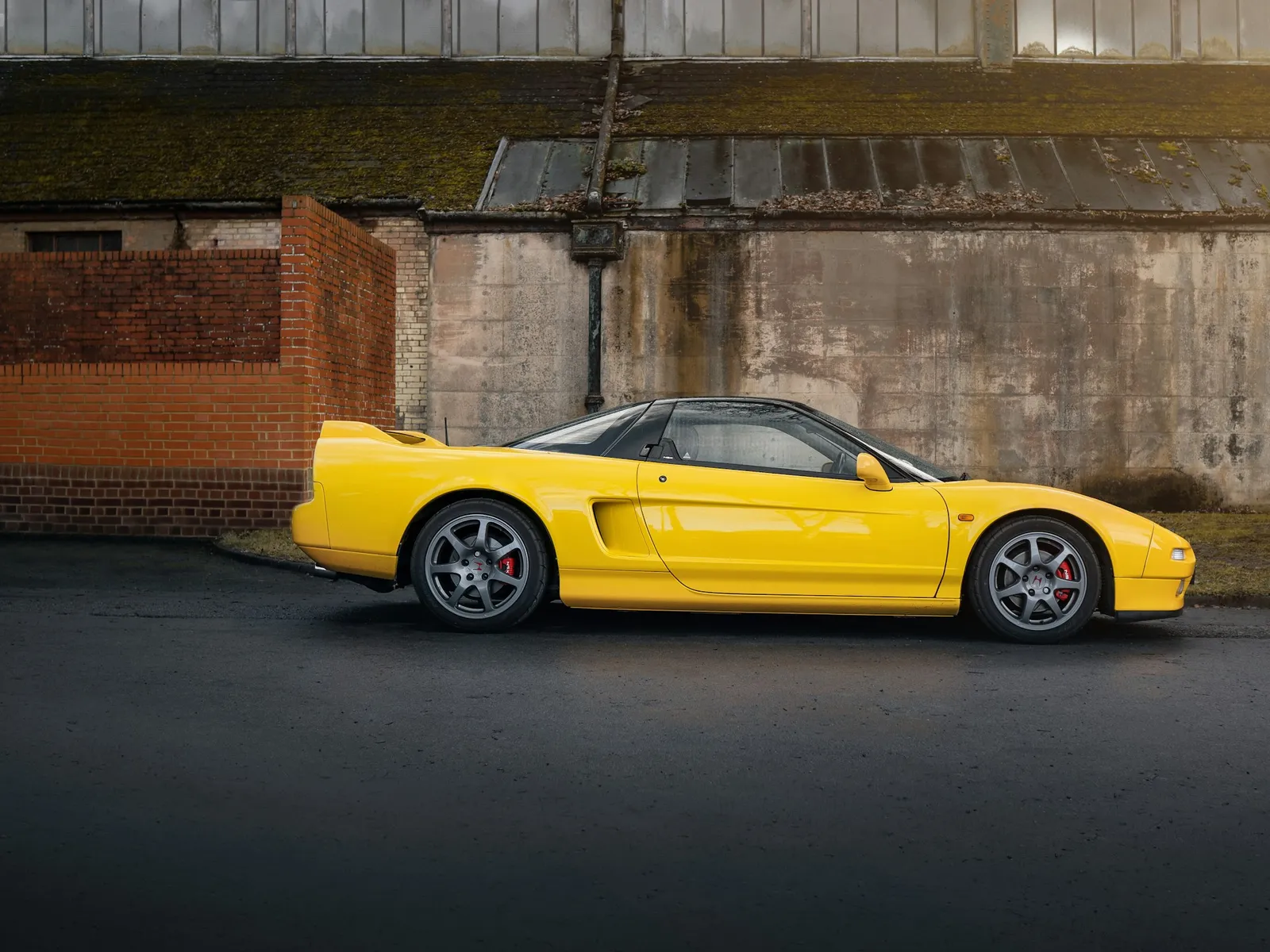
There are certain cars that shift the direction of the entire car industry and the Honda NSX is one of them.
When it arrived back in 1990, it didn’t just introduce a new sports car. It completely challenged the way people thought about supercars. Until that point, the segment was dominated by European manufacturers who were producing cars that were always exciting but equally as temperamental. Fast, beautiful and dramatic, but never easy to live with.
Honda looked at the formula and decided to go about it in a different direction.
The result was the NSX. A mid-engine sports car designed to deliver true supercar performance while maintaining Japanese engineering precision and the reliability that Honda was famous for. It was a bold move at the time and it forced the rest of the industry to rethink what a supercar could be.
At the centre of the NSX sits a naturally aspirated V6 engine mounted behind the driver, with the power going through to the rear wheels. The early cars used a 3.0 litre VTEC engine producing 270bhp, while the later models received a larger 3.2 litre version that produced close to 290bhp. What made the car remarkable wasn’t just the engine but the engineering that surrounded it. The NSX became the first production car in the world to feature an all-aluminium body and chassis, something that was only reserved for racing cars at the time.
The suspension used double wishbones on all four corners and the entire car was tuned with the help of Formula One world champion Ayrton Senna during testing at Suzuka. The result was a car that felt alive and incredibly precise to drive. It was light, balanced and responsive in a way that many of its rivals struggled to match.
But the real magic of the NSX was something far simpler. You could actually use it as a daily driver.
Owners discovered they could drive their NSX regularly without the drama often associated with exotic cars. It started every morning, it behaved like a normal car in traffic and it didn’t constantly remind you that you were driving something fragile that could break down without any notice.
That combination of performance and usability quickly earned the NSX enormous respect within the car industry.
Ferrari themselves reportedly took notice. When the NSX arrived, it was so well engineered that it forced competitors to improve their own cars dramatically in response to the reliable supercar.
Over its fifteen year production run, the first generation NSX evolved steadily. The early NA1 cars featured the 3.0 litre engine and a five speed manual gearbox. In 1997, the car was updated with a larger 3.2 litre engine and a six speed gearbox, known internally as the NA2 generation.
Special versions also appeared along the way, including the lightweight NSX Type R, probably one of the most focused and sought after Japanese performance cars ever built.
Today the NSX sits comfortably amongst the great modern classics. It represents a moment when Japanese engineering stepped directly into the supercar space and proved that precision, balance and reliability could co-exist with speed and excitement, something other manufacturers had failed to do.
Through Autoselecta, we see NSX models come through the auctions on a regular basis and we’ll be sure to let you all know when they arrive. Each car comes with a detailed auction inspection report and the condition is fully graded, which allows buyers to understand exactly what they are bidding on before making a decision. Our team reviews the vehicles coming through and will highlight the most interesting examples, so that you have the opportunity to place a bid in advance of the live auction.
If the Honda NSX is on your bucket list, registering your interest through Autoselecta ensures you’ll be notified when the right model appears.
Some cars become legends because of the marketing, while others earn that status through engineering and the way they drive. The NSX proved that a supercar could be precise, reliable and thrilling all at the same time and in doing so, it quietly changed the supercar world forever.
Thank you Honda.