






Buying Guides
Mercedes AMG G63 From Japan: Buying Guide
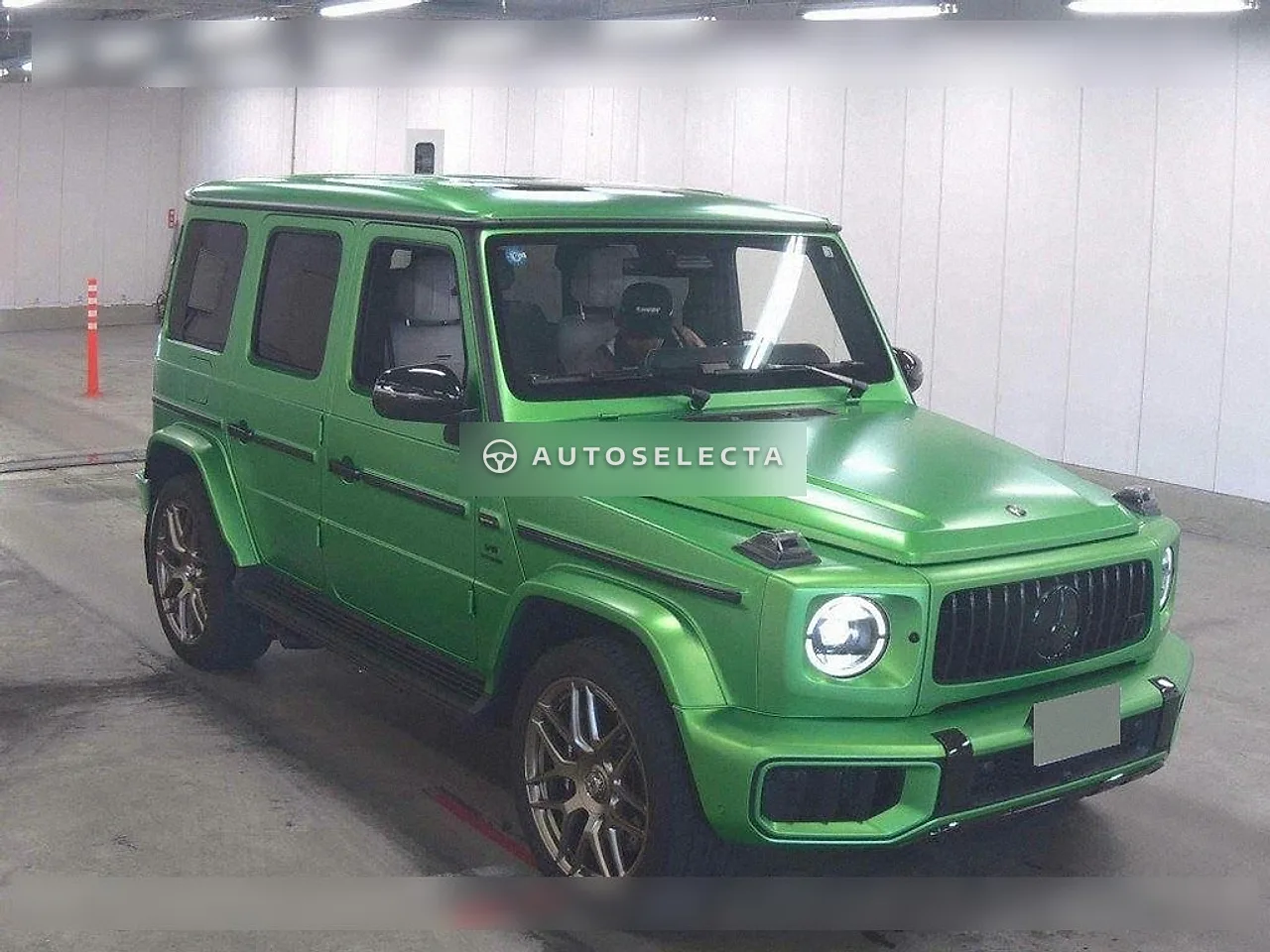
The Mercedes AMG G63 is a square-cut luxury SUV with a twin-turbo V8, and Japan's auctions hold everything from older V8 models to almost new, heavily optioned cars. If you want a particular colour, interior and generation, that choice is the reason to buy from Japan. This guide covers the generations, the paint and option details worth knowing, and what to check before you bid.
At a glance
- Japanese auctions list G63s from 2012 to 2026, including 2025 and 2026 cars with very low mileage.
- Earlier cars (2012 to 2018) have the 5.5 litre twin-turbo V8. Since 2018 it is a 4.0 litre twin-turbo V8 with 585 PS.
- MANUFAKTUR Magno matt and satin paints are the most sought-after finishes, and they need extra care when judging condition.
- Both left-hand drive and right-hand drive cars come up, so UK, Australian, European and UAE buyers all have options.
- A recent year or a high auction grade does not prove a car is unregistered. Check the history before bidding.

Why the G63 became a cult car
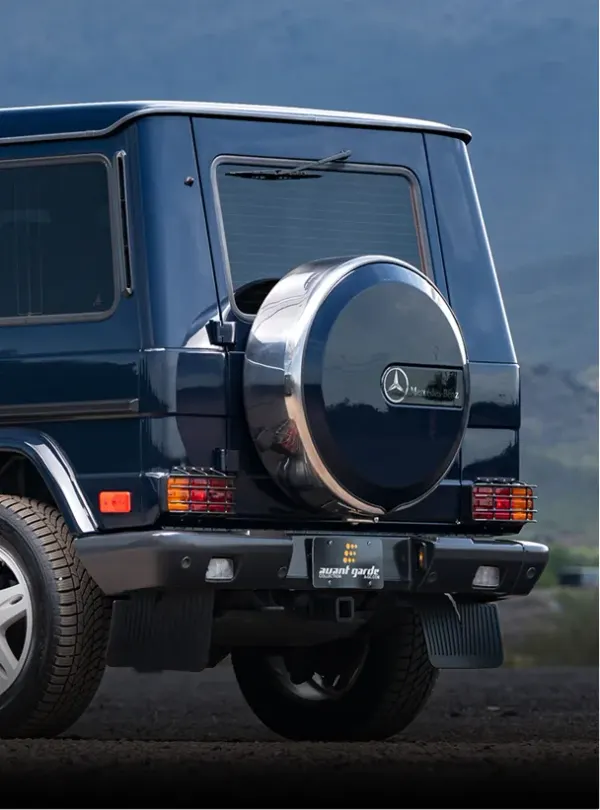
The G Class appeared in 1979 as a rugged off-road vehicle, and the silhouette has barely changed since. The upright windscreen, exposed door hinges, the distinctive door-closing sound and the rear-mounted spare wheel are all still there. Mercedes turned it into a luxury icon without losing what made it recognisable.
Then AMG added serious performance. The result makes little conventional sense, a large, heavy SUV with the acceleration of a sports car and a proper AMG V8 soundtrack. That is much of the appeal. The G63 is a status symbol, but underneath it is a genuinely well-engineered vehicle.
The AMG V8 across generations
The engine is one of the main reasons to buy. G63s built from 2012 to 2018 have AMG's 5.5 litre twin-turbo V8, with huge torque and a muscular sound. The revised G63 launched in 2018 uses a handbuilt 4.0 litre twin-turbo V8 with 585 PS and 850 Nm, paired with a nine-speed automatic and four-wheel drive.
The latest generation keeps the 4.0 litre V8 and adds 48 volt mild hybrid technology, along with changes to the suspension and refinement. It reaches 100 km/h in roughly 4.3 seconds when suitably equipped.
MANUFAKTUR Magno paint and options
Factory specification is where Japan's G63s stand out. Mercedes' MANUFAKTUR programme lets owners order unusual paints, interiors and exterior details, and many Japanese cars were ordered with extensive options. The Magno finishes are the most desirable: Night Black Magno, Monza Grey Magno, Kalahari Gold Magno and others. Some Japanese limited editions have striking colour combinations of their own.
Inside, look for:
- Nappa leather and diamond-quilted seats
- Contrasting stitching and bespoke colour combinations
- Carbon fibre trim and upgraded audio
- AMG Night Package and factory wheel choices, which can make two G63s look completely different
For enthusiasts and collectors, finding the right specification often matters more than finding the lowest mileage.

Why Japan suits the G63
Japan has a long appreciation for prestige European cars, and the G63 is well represented. You can find both left-hand drive and right-hand drive examples. Right-hand drive suits buyers in the UK and Australia, while left-hand drive auction cars can suit buyers in Europe and the UAE.
Many have covered modest mileage, because they were luxury vehicles rather than daily transport. As with any performance car, low mileage should be backed by maintenance records and a satisfactory condition report. The real advantage is choice: instead of waiting for the right car at a local dealer, you can look across a much wider range of specifications.
Almost new G63s at auction
At the time of writing, Japanese auction listings include 2025 and 2026 G63s with very low mileage, some graded 6 or S depending on the auction house. These can have only a few thousand kilometres and look close to unused. For someone thinking of ordering a new G63, that is an alternative worth comparing.
Be careful, though. A recent model year or a very high grade does not automatically mean the car is factory new or unregistered. Check its registration history, warranty position, specification and condition before bidding. Local-market equipment, warranty cover and registration requirements can also differ for international buyers.
Older G63s and the G55
The 2012 to 2018 G63 keeps the more traditional G Class character: a commanding seating position, a distinctive interior and the 5.5 litre V8. It feels more mechanical and less refined than the newer car, which is exactly why some enthusiasts prefer it. It is also a more accessible way into G63 ownership, although the best original cars remain desirable.
The supercharged G55 AMG, with its 5.4 litre V8, is another interesting alternative with a different sound. Older G Wagens turn up at Japanese auctions in good original condition. The key is buying carefully, and corrosion, suspension wear, previous modifications, mechanical maintenance and the state of expensive interior parts all deserve attention.
Will a G63 hold its value?
The G63 has a good reputation for holding its value compared with other large luxury SUVs. Its design, global recognition and strong demand all help. But not every G63 is a collector's car, and prices vary a lot by generation, mileage, specification and condition.
Desirable factory colours, unusual MANUFAKTUR interiors and limited editions can command premiums. A heavily optioned car that has already taken its depreciation may look better value than ordering new. The opportunity from Japan is to compare real auction values with local retail prices, with all import costs included.
What to check before you bid
A G63 is capable and sophisticated, but it is not cheap to maintain. Look at:
- Service history, especially for the AMG V8, gearbox, suspension and four-wheel drive.
- Accident repairs, damaged wheels, worn brakes and modifications that could affect reliability or resale.
- Matt paint. Magno finishes cannot be polished like gloss paint, so the quality of any previous repair matters a great deal.
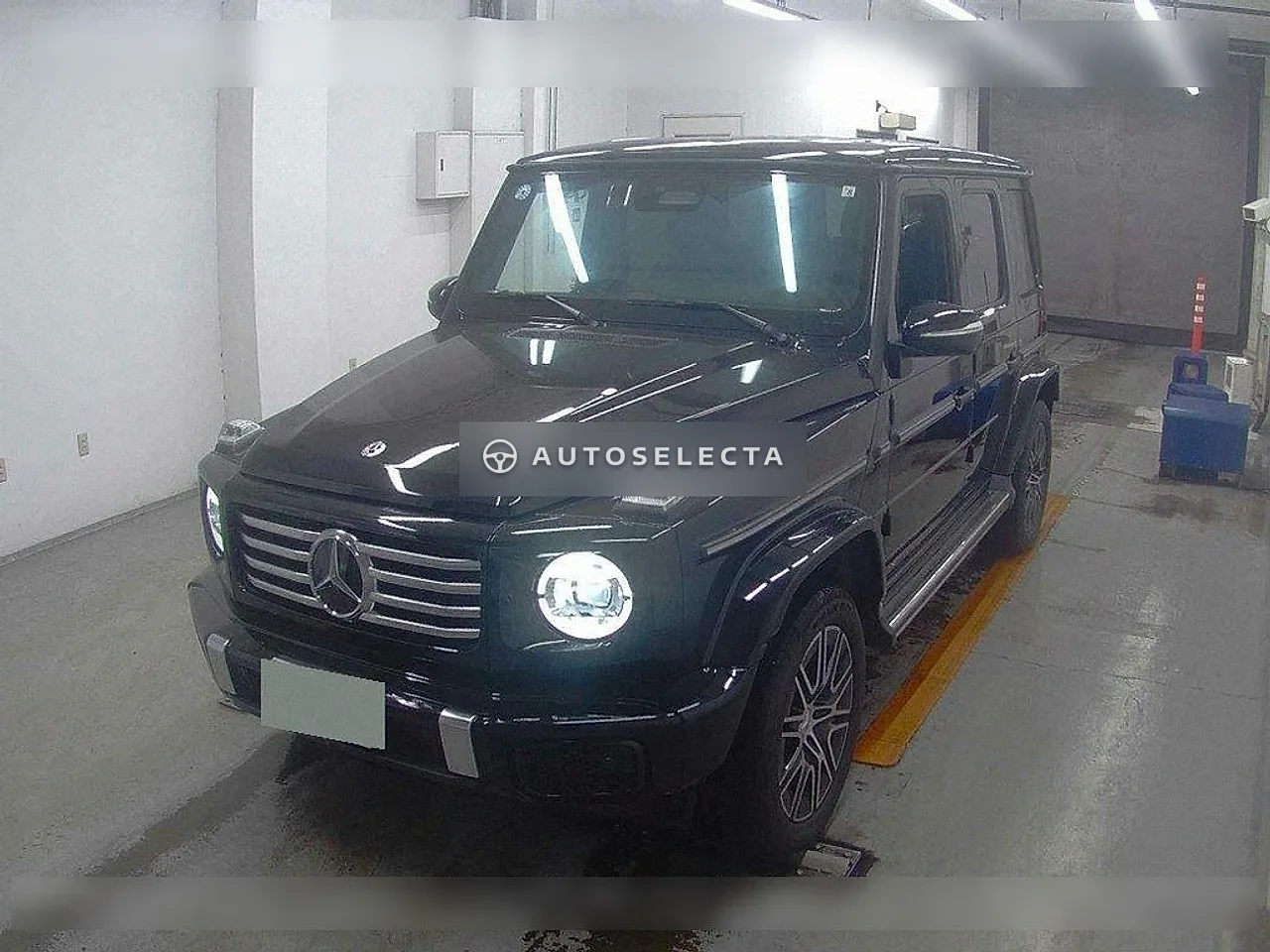
On Autoselecta you can read the auction sheet translated into English, and add an Inspector Report Package where the auction allows it. An inspector in Japan looks at the car before you bid and takes up to 50 extra photos. For a valuable G63, that extra information is worth having. It is not a full mechanical inspection.
What a G63 costs to import
The hammer price is only part of the cost. Shipping, auction charges, import VAT and any preparation or registration costs all add to it. UK imports from Japan pay 0% import duty and 20% import VAT. Our cost calculator gives an itemised estimate before you bid, so you can compare a Japanese car properly with one for sale locally.
For buyers outside the UK, we can also arrange individual shipping quotes for destinations including Europe, the UAE and Australia.
Which G63 we would buy
Our pick would be a modern 4.0 litre V8 with a carefully chosen MANUFAKTUR specification. A Magno paint finish, contrasting Nappa leather, the AMG Night Package and the right factory wheels make a compelling combination. For something more traditional, an original 5.5 litre G63 is an excellent alternative. And the supply of nearly unused 2025 and 2026 cars makes the market especially interesting right now.
The G63 is not a rational car. You buy it because nothing else looks, sounds or feels quite like it, and that is why it became a cult classic.
Find your Mercedes G63 through Autoselecta
New cars are added through the week, and the right G63 specification can be worth waiting for.
- Search Mercedes G Class vehicles at Japanese auctions
- Browse all Mercedes vehicles from Japan
- Calculate your G63 import costs
- Tell us what you are after on WhatsApp: colour, interior or generation.